


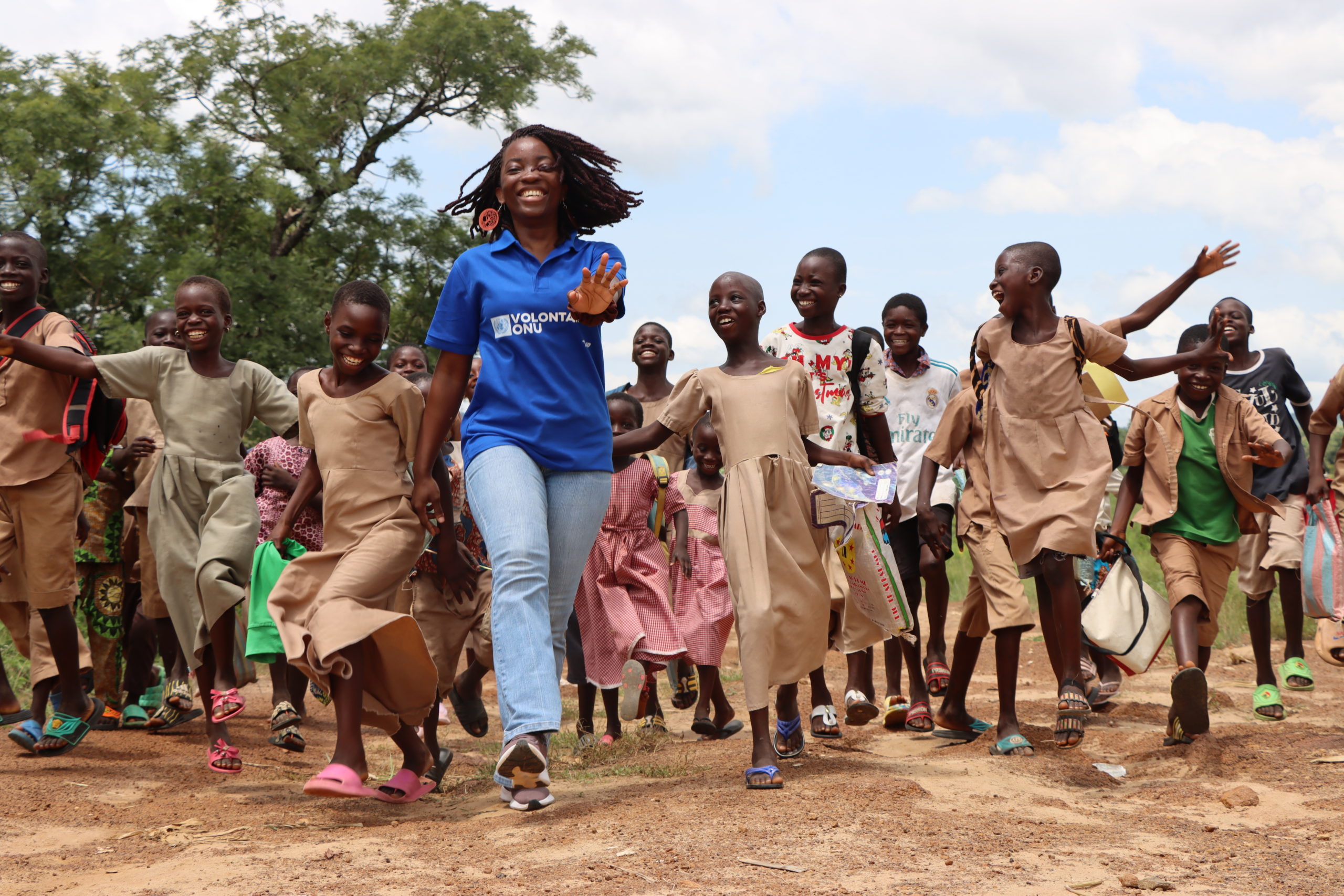
Late in the evening, after the desks have emptied, a volunteer stays behind at a reception centre to help a family fill out forms in a language they do not yet command. No one records the moment. Yet for that family, something shifts. The world, which had narrowed, opens a little again.
This is how solidarity begins. Not as an abstraction, but as an act.
Our age has no shortage of upheaval. Displacement today is not episodic; it is widespread. Conflicts endure, climates shift, and fragile systems strain under repeated shocks. In such a world, sympathy alone is insufficient. It must be organized, sustained, and given direction. Solidarity must become service.
The year 2026 offers a rare convergence. It marks the 75th anniversary of the 1951 Refugee Convention—a cornerstone of international responsibility—and the International Year of Volunteers, proclaimed by all Member States of the United Nations. One affirms obligation. The other affirms participation. Together, they suggest a simple truth: protection endures only when it is practiced.
In refugee settings, that practice is often carried by volunteers. They are present in the ordinary places where systems meet lives: classrooms, clinics, community centres, registration lines. They translate, teach, guide, and listen. They close the distance between policy and person.
For the United Nations Volunteers (UNV), volunteering is not add-on to development; it is part of it. Societies cohere when individuals act beyond obligation. Volunteerism channels that instinct into something durable.
UN Volunteers serve across operations worldwide, contributing to protection, registration, resettlement, and community outreach. They bring competence, but also proximity—a familiarity with context that tempers universal principles with local knowledge.
They teach children who share their language. They guide newcomers through unfamiliar systems. In doing so, they alter the moral geometry of assistance: the line between giver and receiver becomes less fixed. Agency returns to those from whom it was stripped.
This shift matters because durable solutions—return, integration, resettlement—require more than institutional design. They require participation. They require people to see themselves not as objects of policy, but as its authors in part.
Volunteering makes that possible.
It also serves another function, less discussed but no less important. It sustains social cohesion. In communities under strain, it creates points of contact. It fosters reciprocity. It builds habits of cooperation that outlast crises.
Yet the context is sobering. Needs are rising. Resources are finite. Attention is uneven. There is a risk that solidarity becomes episodic—intense, then absent.
Volunteerism resists that pattern. It is not governed by headlines. It is sustained by commitment. It extends the reach of institutions without diminishing their responsibility. It enlarges the space in which solutions can be pursued.
The International Year of Volunteers is, therefore, not ceremonial. It is an invitation—to governments to enable participation, to institutions to integrate volunteers more fully, and to societies to recognize the value of service. Investment in volunteerism is not ancillary; it is strategic.
Seventy-five years ago, the Refugee Convention gave legal expression to a moral insight: that those forced to flee should not stand alone. That insight remains intact. But law, by itself, is inert. It requires custodians in daily life.
If solidarity is the principle, volunteering is its discipline.
We return, then, to the volunteer at the reception centre. The act is small. It does not end a conflict or rebuild a country. But it restores a measure of order where there was confusion, and dignity where there was uncertainty.
In times such as these, that is not a marginal achievement. It is how the larger system holds.
(Timed ahead of World Refugee Day on 20 June, this opinion editorial reflects on the international day designated by the United Nations to honour refugees across the globe. Each year, the day highlights the rights, needs and hopes of those forced to flee their homes.)