


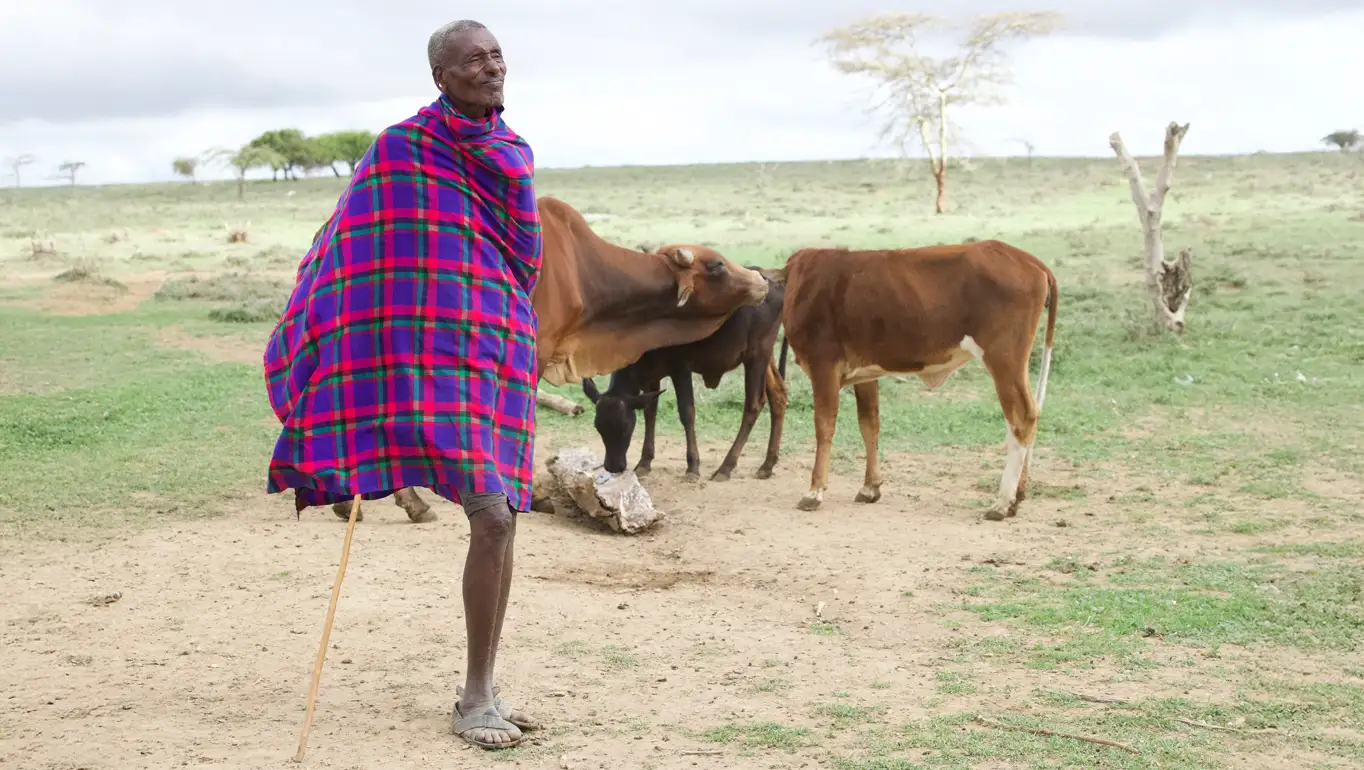
The United Nations has designated 2026 the International Year of Rangelands and Pastoralists, placing a long-overlooked issue on the global agenda. As governments prepare for the 17th Conference of the Parties to the United Nations Convention to Combat Desertification (COP17) in Mongolia, will pastoralists be meaningfully included in the decisions to secure their rights and shape their future?
Rangelands cover more of the Earth’s surface than any other land use type, supporting up to 500 million people who directly rely on pastoralism for their livelihoods. Yet these communities remain persistently overlooked in policy and investment decisions. This disconnect is no longer tenable. Overlooking these communities undermines climate resilience, food security, and the sustainable management of these landscapes.
At COP16 in Riyadh, parties took a first step by formally recognizing land tenure as central to combating desertification. Now, COP17 must build on that commitment.
A system misunderstood
Pastoralism is often mischaracterized as inefficient or environmentally harmful. Even when valued, it is often confined to agricultural or tourism narratives, overlooking pastoralists as rightsholders. In reality, it is one of the world’s most climate-adapted livelihood systems.
The ability for these communities to move livestock across landscapes over seasonal changes is not a vulnerability. It is the system’s strength.
However, according to RRI’s research, this core principle is rarely recognized in law or policy. Across multiple countries, pastoralists’ mobility rights are either weakly protected or not recognized at all.
Instead, policies favor fixed land ownership, agricultural expansion, or industrial development models that fragment rangelands. The result is a steady erosion of pastoral systems that have sustained communities for centuries.
When rights exist on paper, but not in practice
Even where pastoralists have formal rights, these often fail to translate into real protection. Legal frameworks frequently impose administrative burdens, such as registration, certification, or costly procedures, that are incompatible with mobile livelihoods.
Structural pressures are also intensifying across regions. Agricultural expansion, infrastructure development, extractive industries, and even climate and conservation projects are increasingly encroaching on pastoral lands. These pressures restrict movement, fragment ecosystems, and undermine livelihoods.
Women face the greatest barriers.
Despite their central role in pastoral economies, they remain largely excluded from land rights and decision-making processes, with few legal protections tailored to their realities.
Three lessons from the ground
Recent case studies illustrate how these dynamics play out in practice:
In Bolivia’s highlands, the Ayllu Kari Baja community shows how land fragmentation, driven by inheritance systems and weak policy support, has reduced viable grazing areas to unsustainable levels. Families are forced to migrate, and pastoralism itself becomes economically unviable.
In Kenya, pastoral mobility, once governed effectively through customary systems, is being disrupted by land privatization, infrastructure projects, and carbon initiatives. The loss of grazing corridors has led to livestock deaths, increased conflict, and reduced climate resilience.
In Mongolia, the expansion of mining operations demonstrates how even recognized land use can be overridden. Herders have lost access to traditional grazing lands and water sources, even when they hold formal rights to parts of their territory, which are weak on paper. Environmental degradation has followed, alongside deep social and cultural loss.
Across these diverse contexts, we see the same pattern. When mobility is constrained, pastoral systems collapse.
A turning point for global policy
The International Year of Rangelands and Pastoralists and UNCCD COP17 represent more than symbolic milestones.
They are an opportunity to rethink how land, climate, and development policies are designed.
The decisions at COP16 and rightsholder-led efforts have laid the groundwork. COP17 must now move from recognition to implementation, integrating pastoralist rights into national and global commitments.
The evidence points to a clear set of priorities.
First, mobility must be recognized as a fundamental right. Without it, pastoralism cannot function.
Likewise, a full, flexible set of tenure rights—including access, use, and management—must be formally prioritized in UNCCD’s agenda.
Second, governments must legally protect grazing corridors, water points, and seasonal movement routes. These are not marginal spaces; they are the infrastructure of pastoral economies.
Third, customary governance systems must be formally recognized and supported, rather than replaced by rigid, top-down frameworks.
Fourth, women’s rights must be addressed directly, with policies that ensure equal access to land, mobility, and leadership.
Finally, climate finance, conservation, and development investments must align with pastoral rights. Projects that restrict access to land without consent or compensation undermine both livelihoods and environmental goals.
From visibility to inclusion
Pastoralists are often highlighted in global discussions as symbols of resilience. But recognition without inclusion is not enough.
If global efforts to combat desertification, strengthen food systems, and build climate resilience are to succeed, pastoralists must be treated as partners. Their knowledge, systems, and governance models offer tested solutions to some of today’s most pressing challenges.
As the world gathers in Mongolia, we have an opportunity to align policy, investment, and governance with the systems pastoralists have sustained for generations, ensuring their continued role in shaping resilient landscapes and food systems.