


The United Nations’ 80th anniversary in 2025 presents a pressing need to reform international cooperation and the UN system itself. But does this imply starting from scratch? Absolutely not.
On the contrary, major transformation initiatives underway, such as the Pact for the Future, the Global Digital Compact, and the UN80 initiative, aim to build on prior reforms and efforts, while setting their sights squarely on the future. Here is where an institutional innovation from the 1970s has evolved into a model for shifting today’s paradigms: the United Nations International Computing Centre (UNICC).
A vision ahead of its time
The story begins in the 1960s, when the first generations of computers, massive, imposing, and noisy machines, were used for electronic data processing. Given the characteristics of this equipment, the sensitivity of the information they managed, and the prospect of economies of scale, Member States, the UN Secretariat, the United Nations Development Programme (UNDP), and the World Health Organization (WHO) envisioned a shared facility within the UN family and shared ICT services for the three organizations. This vision led to the creation of UNICC in 1970, pursuant to General Assembly Resolution 2741 (XXV).
Fifty-five years later, UNICC stands as the largest strategic partner for shared, trusted, and cybersecure digital foundations across the entire UN system, embodying a mandate that was remarkably ahead of its time and remains strikingly relevant to today’s challenges. While the UN80 initiative calls for doing more, more effectively, and with fewer bureaucratic burdens, UNICC’s founding vision advocates for maximizing shared infrastructure and resources to promote efficiencies across the system.
From cost savings to mindset shifts
In this context, it is no coincidence that the Secretary-General’s first progress report under Workstream 3 of the UN80 Initiative highlights the importance of consolidating the fragmented UN system technology landscape, building on lessons from UNICC. But what exactly are those lessons from UNICC? What can we learn from an entity created five decades ago with exactly that mandate? The key lies in a word that has accompanied the Centre throughout its evolution: sharing.
When we talk about shared services and infrastructure, the first benefits that come to mind are cost reduction and economies of scale. However, in UNICC’s experience, sharing goes far beyond cost savings – it compels us to shift mindsets that may otherwise hinder impactful digital transformation. As a shared resource center, UNICC builds solutions that, by default, promote inter-agency collaboration, reuse of digital components, and the avoidance of duplication.
In other words, when UNICC partners with a specific UN entity, it balances the customized needs of that partner with a systemic view of challenges, lessons, and digital success stories from across the UN system. This places UNICC in a strategic position to prevent reinventing the wheel within the UN family.
Centres of excellence: sharing knowledge to scale
What does UNICC do with the lessons learned along the way? Sharing also means learning together. The knowledge generated from delivering services and developing solutions is systematized and ultimately becomes Centres of Excellence. Currently, UNICC hosts Centres of Excellence in solutions and technologies that enhance operational efficiency, including in Cybersecurity, Hyperautomation, and Payment Technology.
Along those lines, the UN 2.0 Action Plan emphasizes the importance of joint centers of excellence and joint investment in technology infrastructure to modernize the UN system, citing UNICC as an example. This offers yet another timely lesson from UNICC: sharing of investments and knowledge transforms the scaling up of digital solutions from a burden into a catalyst for innovation.
Governance that reflects collective ownership
Finally, UNICC’s governance framework offers a compelling example of how inter-agency collaboration can be structured to align priorities and drive collective impact. UNICC aligns its priorities with the guidance of its Management Committee, composed of representatives from across the entire UN system. This ensures that initiatives developed within this framework are both relevant and impactful.
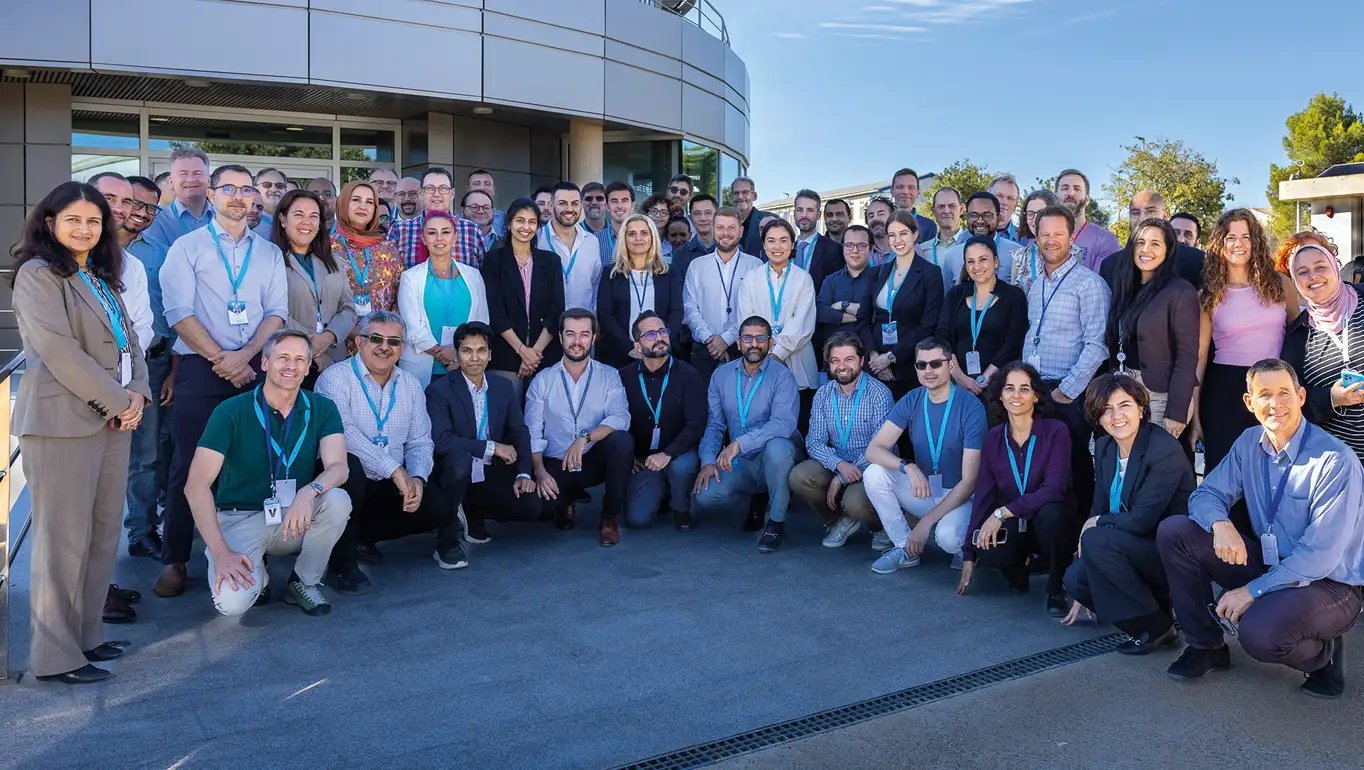
UNICC also actively fosters exchange through other spaces such as its first Annual Forum, held in October 2025, which brought together over 100 technology leaders and digital experts system-wide to showcase UNICC capabilities and explore collaboration opportunities. Another example is the Common Secure Conference, which, for seven years, has provided a critical platform for cybersecurity collaboration among UN partners.
Toward a more collaborative future
In times of change for the multilateral system, it is worth taking a closer look at the models that have already delivered the very outcomes we now seek to expand, replicate, and learn from.
UNICC demonstrates that collaboration within the UN family, as opposed to working in silos, fragmentation, and duplication, brings us closer to the spirit of the UN80 initiative: a more agile, integrated, and equipped UN system.
Beyond drawing inspiration from such examples, the moment calls for doubling down by scaling up, investing in, and reinforcing proven models that already deliver impact across the system.