


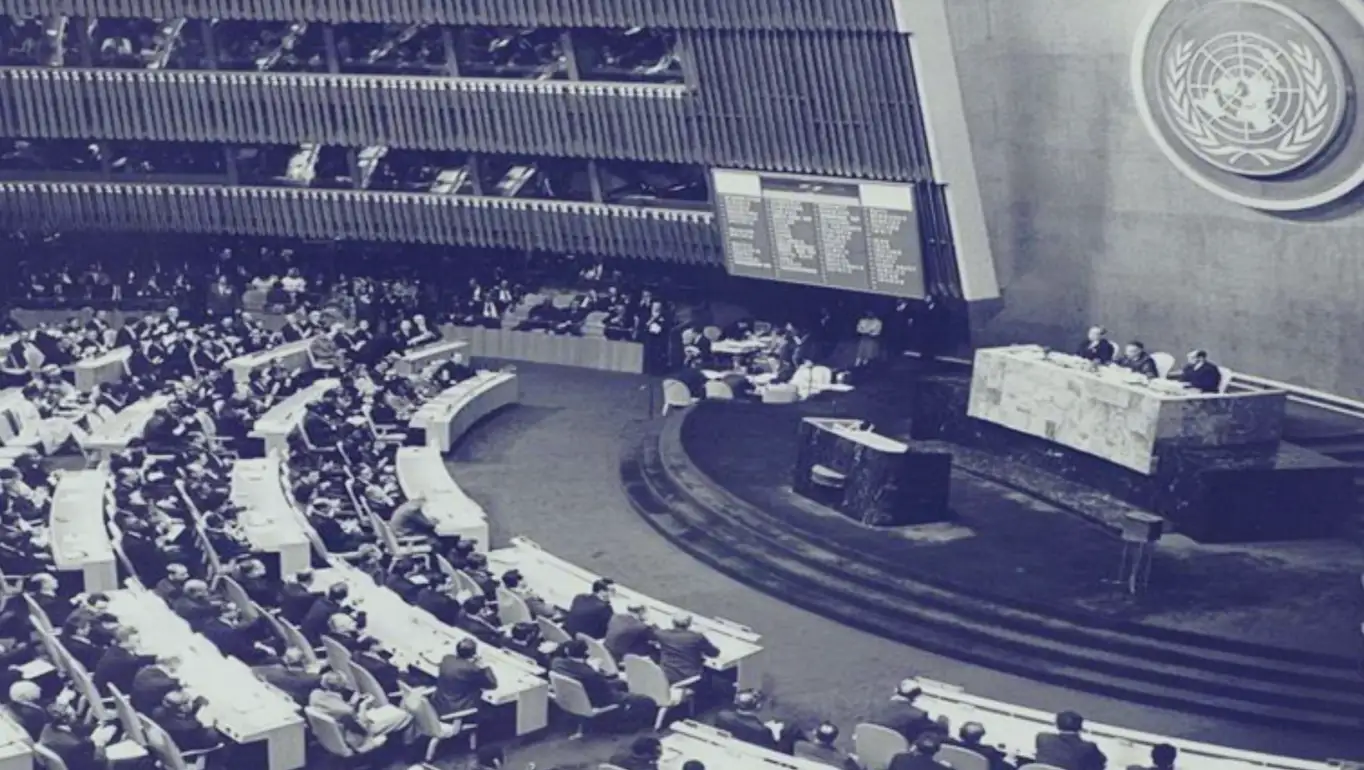
In 2026, the Joint Inspection Unit (JIU) commemorates its 60th anniversary. Established in 1966 by the United Nations General Assembly, the JIU is the UN system’s only external, independent, system-wide oversight body. As such, it is important to understand how the JIU works behind the scenes—and how oversight, accountability and learning contribute to a more effective multilateral system.
From institutional experiment to system-wide actor
In the early 1960s, the United Nations was confronted with a serious financial crisis, which precipitated the proposal for an independent administrative and financial oversight body. Originally created on an experimental basis under General Assembly resolution 2150 (XXI) of 4 November 1966 and later extended under Assembly resolutions 2735 A (XXV) of 17 December 1970 and 2924 B (XXVII) of 24 November 1972, the JIU became a permanent body in 1976 when the General Assembly approved its statute by resolution 31/192 of 22 December 1976, establishing the Unit “as a subsidiary organ of the legislative bodies of the organizations” that have accepted its Statute.
A unique system-wide perspective
The JIU is the only external, independent oversight body with a mandate to examine issues across the United Nations system as a whole, through system-wide inspections and evaluations. Its working methods have evolved with the UN system itself, and the number of inspectors has changed over time, reflecting shifts in scope and complexity, while the range of participating organizations has expanded steadily.
Unlike internal oversight functions, the JIU is external to the organizations it reviews. It does not form part of management structures, nor does it report to executive leadership. Instead, the JIU reports directly to legislative organs and governing bodies, providing Member States with independent, evidence-based analysis to support their oversight responsibilities.
Appointment and role of inspectors – who leads the JIU?
When the JIU was created on an experimental basis during the UN financial crisis, the Ad Hoc Committee proposed a “small inspection unit.” During this temporary period (1965–1968), the JIU consisted of eight inspectors. When the JIU became a permanent subsidiary organ of the UN General Assembly through Resolution 31/192 (1976), its structure changed. The number of Inspectors was set to “not more than eleven,” which is still the rule today. The JIU statute defines the Unit as consisting of up to 11 inspectors, appointed by the UN General Assembly for a five year term each, renewable once. A Chair and a Vice‑Chair are elected amongst the Inspectors for a one-year term. Inspectors serve in their personal capacity and act independently of any national or organizational interests, and are supported by a professional Secretariat based in Geneva, composed of Evaluation and Inspection Officers, Research Assistants, and administrative and IT support staff, which provides analytical, research, coordination and administrative support. Together, this structure enables the JIU to combine strategic oversight leadership with rigorous technical analysis.
Why participation matters
Today, the JIU provides oversight services to the 28 UN system organizations that have accepted its Statute, soon to be 29 with the International Organization for Migration joining in 2027. This participation allows the JIU to address challenges that cut across mandates, structures, and geographies. The voluntary participation of organizations in the JIU framework is a defining feature of its mandate.
From fragmentation to system-wide learning
Many of the challenges faced by UN system organizations are not unique to a single entity. Issues such as governance arrangements, human resources management, risk management, digital transformation, results-based management and coordination are pertinent to all agencies across the UN system. JIU’s value lies in its ability to examine these cross-cutting issues from a system-wide perspective. Rather than focusing on one organization at a time, the JIU identifies common patterns and points to areas where greater coherence could improve performance.
Relationship with other oversight functions – complementarity
Most UN organizations have their own internal oversight mechanisms, such as internal audit, evaluation and investigation functions. The Office of Internal Oversight Services (OIOS) provides independent oversight of UN activities under the Secretary-General’s authority, with a specific mandate covering internal audit, investigation, evaluation and inspection services within that institutional scope. The JIU, by contrast, looks across organizations to identify systemic issues and shared challenges, compare practices, and promote learning at a system-wide level. This is where it plays a unique role.
Importantly, several oversight functions within UN organizations have themselves been introduced or strengthened over time following JIU recommendations.
Program of work – how the JIU decides what to review
Each year, the JIU adopts an annual program of work through a structured and consultative process. In defining its priorities, the Unit draws on its own analysis and experience, requests from legislative and governing bodies, suggestions from executive heads, and inputs from other oversight and coordination bodies within the UN system. Once approved by the Inspectors, the program of work is transmitted to the Secretary-General for issuance as an official United Nations document and shared with participating organizations.
How the JIU works
For each review, the JIU combines quantitative and qualitative methods. Its work typically includes interviews with stakeholders, surveys and questionnaires, analysis of policies and data, and close engagement with focal points in participating organizations. Draft findings are shared for factual validation, ensuring accuracy and balance. Final reports are then submitted to governing bodies for consideration, accompanied by recommendations.
Nature of recommendations – authority without enforcement
Some recommendations address strategic issues such as governance, accountability, effectiveness or efficiency, and are formally tracked over time. Others are more operational in nature, encouraging incremental enhancements or the adoption of good practices. Together, they support continuous improvement across the system.
Why oversight matters today
Oversight is sometimes perceived as a technical or procedural function. In reality, it plays a central role in strengthening trust between Member States and UN organizations, and ultimately between the UN system and the people it serves.
At a time when multilateral institutions face increasing scrutiny, financial constraints and complex global challenges, system-wide oversight helps ensure that limited resources are used effectively, that reforms are informed by evidence, and that lessons learned in one part of the system can benefit others.
For nearly 60 years, the Joint Inspection Unit has steadfastly supported this process to provide independent analysis, promote learning, and help the United Nations system adapt and improve.
As the UN system continues to evolve, credible, system-wide oversight will be critical to providing Member States with impartial assessments on its functioning and delivery.
Stay connected with JIU60
Today, the JIU oversees 28 (soon to be 29) participating organizations across the UN system. The JIU covers a wide range of cross-cutting governance and management issues, and has issued hundreds of reports and recommendations since its creation.
• Follow the JIU on LinkedIn:
Joint Inspection Unit of the United Nations System | LinkedIn
• Visit the JIU 60th Anniversary homepage
• Explore the JIU website: unjiu.org
To receive updates on JIU publications, anniversary activities and outreach initiatives, you may subscribe to JIU communications by contacting jiucommunications@un.org