


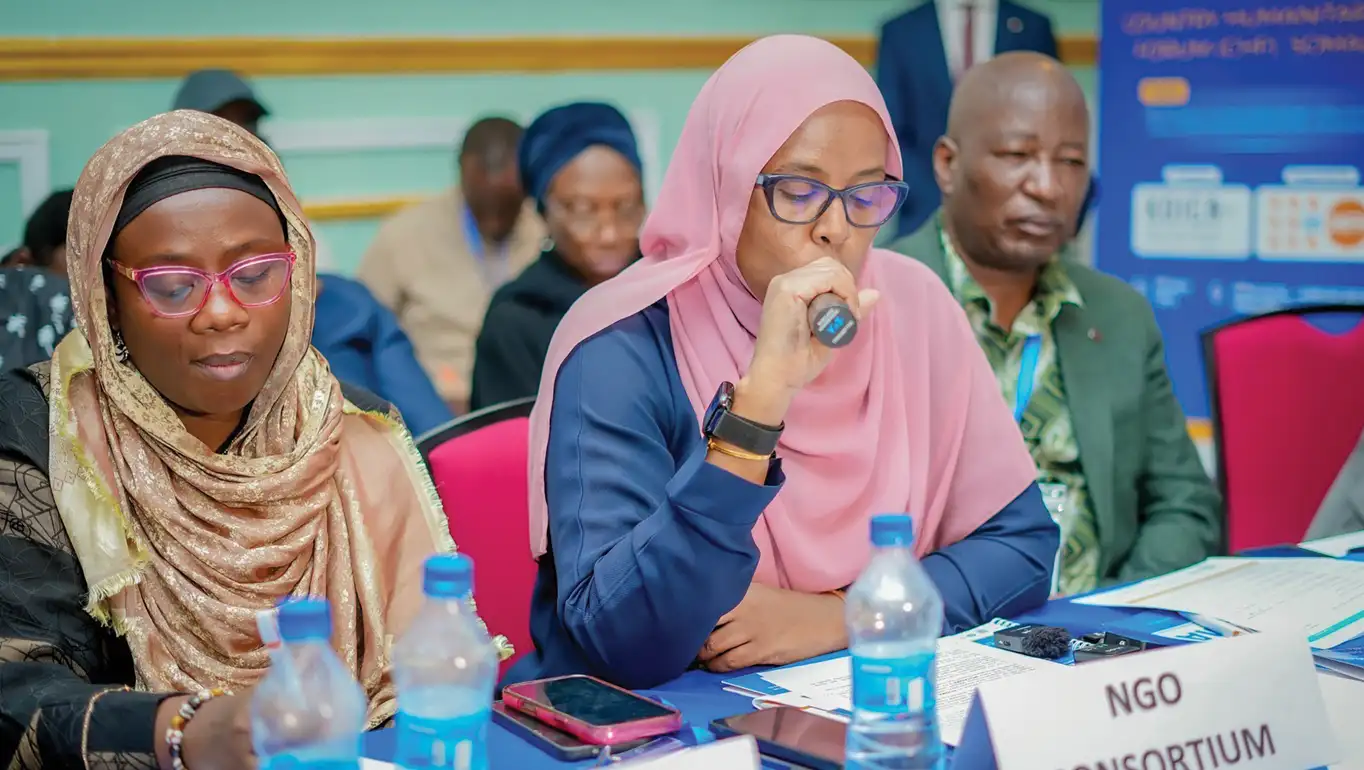
No matter who you are or where you serve, we all have a role to play in preventing and responding to sexual exploitation and abuse. Read this interview with Nimo Hassan, Director of the Somali NGO Consortium, about her work to ensure that local and national actors are at the heart – and the helm – of our collective response.
What does a typical day look like for you?
The work of coordinating NGOs across Somalia begins long before the first meeting of the day. Working with diverse organizations means updates and requests arrive constantly; some are routine, while others require immediate attention or advocacy.
As the Director of the Consortium, my role is to support and represent this network while managing my team, who are spread across the country.
Coordination, advocacy and representation are central to my role. Whether discussing access issues, policies or operational challenges, the Consortium brings organizations together and facilitates information-sharing with UN agencies, donors, the Government and other partners.
While no two days are the same and priorities can shift quickly, the core purpose of my role remains constant: strengthening the NGO community in Somalia and helping to ensure that humanitarian and development efforts reach those who need them most.
What is your proudest achievement in this role?
One of my proudest accomplishments has been supporting our diverse NGO members in working collectively to ensure their voices are heard in key humanitarian discussions in Somalia. The Consortium provides a vital platform for national and international NGOs to share field perspectives and influence the decisions affecting our communities.
I am especially proud of our efforts to support members in elevating the protection of women and girls and, in particular, protection from sexual exploitation and abuse and sexual harassment (PSEAH). We have also advocated for stronger funding for protection services, which remain under-resourced despite significant needs.
It is rewarding to see our members come together with a stronger collective voice. This collaboration contributes to more accountable and effective humanitarian action – and most of all, it leads to better outcomes for the communities we serve.
Alongside your leadership of the Somali NGO Consortium, you also serveas Chair of the International Council for Voluntary Agencies (ICVA) Board. What does ICVA do and what are your priorities as ICVA’s PSEAH Champion for 2026?
ICVA is a global network of over 170 NGOs whose mission is to make humanitarian action more principled and effective by working collectively and independently to influence policy and practice. As its PSEAH Champion,
I am committed to strengthening collective leadership and accountability on this issue across the humanitarian system.
Our work on the Championship focuses on three flagship priorities:
1. Conduct landscaping and amplify research to keep the system informed;
2. Promote locally led protection efforts by strengthening the Inter-Agency PSEA Community Outreach and Communications Fund;
3. Simplify, promote and support uptake of existing tools, guidance and mechanisms – so that frontline actors can embed PSEAH into their work without undue administrative burden.
Most importantly, underpinning all of this is a commitment to ensuring that the voices of local and national actors – particularly women-led organizations from the Global South – shape global decisions.
Drawing on my experience leading the Somali NGO Consortium and working across NGO, UN, government and donor partnerships, I believe real progress on PSEAH is built on trust, honest dialogue and the willingness to listen to those doing the hardest work in the most difficult places.
What are the major challenges to protecting communities from sexual exploitation and abuse and sexual harassment and how do you overcome them?
The system faces a dangerous paradox: the conditions that increase risk and vulnerability are the same ones eroding our ability to respond. Overcoming this requires ruthless prioritization, smarter use of existing tools and resources, and an honest reckoning with where the system is falling short – which is what this Championship is designed to support. We need to better equip frontline actors, while also ensuring that humanitarian leadership sets the tone on our ethical standards.
Why is it important for PSEA efforts to be shaped and led by local actors?
Trust is local. Communities are far more likely to report exploitation and abuse – and to believe that something will be done in response – when the people they turn to are part of their context, speak their language and understand their realities. Global frameworks matter, but they can only effectively protect people when they are owned and carried by those closest to them.
What message would you like to share with fellow leaders?
You do not need to be an expert on this issue to make a difference, you just need to mean it.
When leaders speak openly about their commitment to safe, respectful behaviour, it changes what teams believe is expected of them and what communities believe is possible. That tone, set from the top, is one of the most powerful tools we have. How we treat people is not a footnote to humanitarian action – it is its foundation.
USEFUL RESOURCES
How to report sexual exploitation and abuse:
Learn more about the UN response:
Learn more about the Somali NGO Consortium:
Learn more about ICVA: