


The accelerating fragmentation of the international system has become a defining feature of contemporary global politics. While fragmentation is certainly far from a new phenomenon, its characteristics today create a set of challenges for international peace and security that are qualitatively distinct from those of previous decades in several important ways. The shifting distribution of power, the multiplication of actors, and the erosion of trust in multilateral institutions all contribute to a geopolitical landscape in which misunderstandings escalate more quickly, crises cross borders more effortlessly, and local disputes are shaped by global dynamics. In such a context, the practice of negotiation, understood not as a discrete action but as an ongoing process of managing relationships and expectations, has taken on a renewed significance. It is against this backdrop that the theme of the 2025 Doha World Negotiation Day, “Negotiating Peace in a Fragmented World: The Case for Preventive Diplomacy,” resonates so strongly.
Precisely as fragmentation intensifies, the tools designed to prevent escalation often struggle to retain their prominence, and, indeed, their value, in public and political discourse. Preventive diplomacy, despite being a long-established pillar of the international community’s efforts to avert conflict, remains one of the least visible forms of diplomatic engagement. In this sense, it occupies a somewhat paradoxical space: it is simultaneously indispensable, yet largely invisible. Its impact is inherently difficult to measure because when preventive diplomacy succeeds, the most consequential outcome is what does not happen. Crises are prevented from materializing, tensions are diffused, and political trajectories that might otherwise have led to violence are redirected. In a world where front-page news is constantly reminding us of widening fractures, these quiet successes rarely capture the public eye. Headlines constantly document breakdowns, confrontations, failures, and disruptions, but seldom record the work that mitigates those outcomes. The challenge lies in recognizing and valuing this form of diplomacy when global attention tends to be drawn toward responding to emergencies rather than investing in their avoidance.
This invisibility is not incidental. At its core, preventive diplomacy is inherently an anticipatory and relational process, with effects that are diffuse, incremental, and cumulative rather than immediate; it is the process of rebuilding communication in cases where trust has eroded and of addressing grievances before they become too deeply entrenched. While such processes are essential, they do not often produce a singular dramatic moment that can be easily narrated. Instead, preventive diplomacy typically generates stability through a series of subtle adjustments, whether in the form of small shifts in expectations or renewed assurances, that are difficult to identify in isolation but that are profoundly impactful over time. Measuring these effects is difficult and complex, and attributing them to specific interventions can be even more so. However, the absence of direct attribution does not diminish their strategic significance.
Amid the complexities of our current moment, the core premise of preventive diplomacy remains unchanged: dialogue is the most effective instrument for managing disagreement without violence, and the preservation of opportunities for dialogue is of the utmost importance. What has evolved is the operational environment in which dialogue must occur. Negotiators now require a different range of competencies that enable them to anticipate not only the immediate implications of their decisions, but the second and third-order effects that may unfold across interconnected systems.
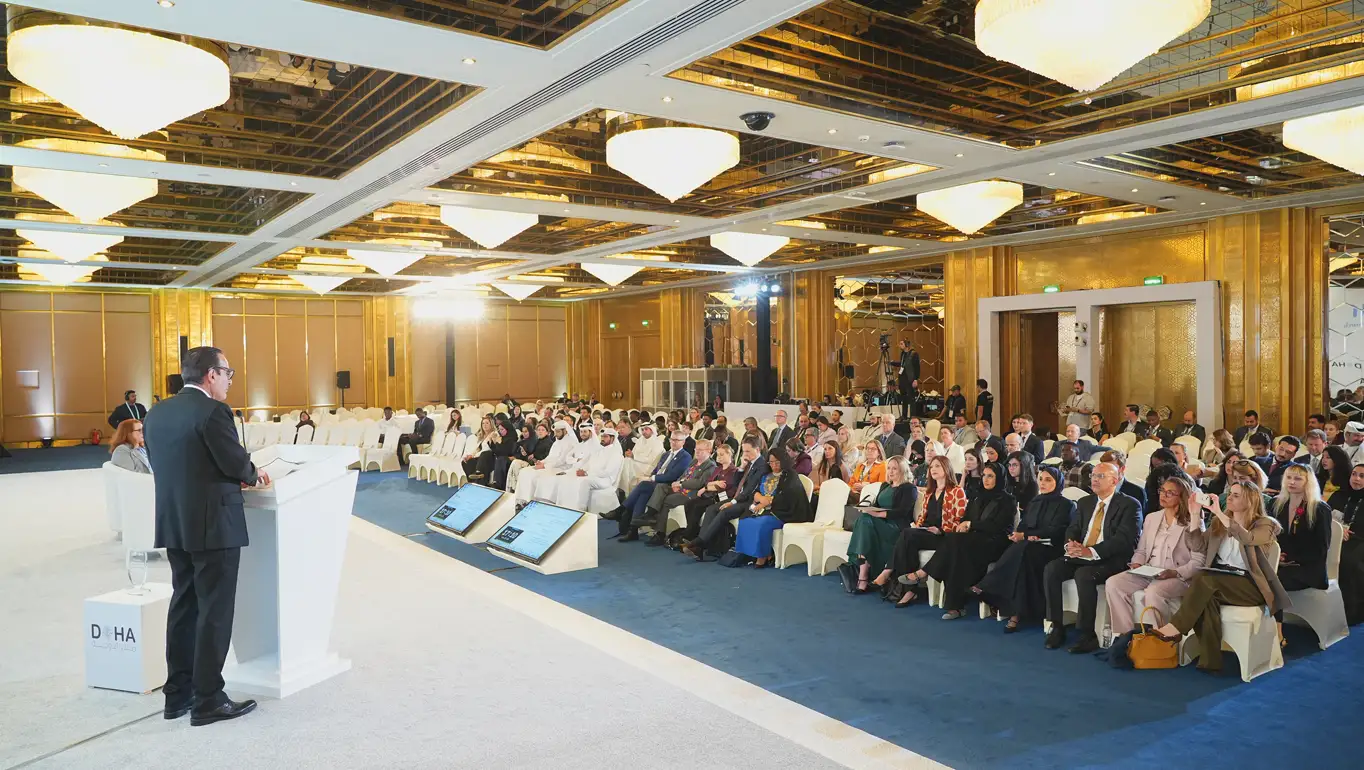
The commemoration of World Negotiation Day in Doha each December serves as a timely reminder of the enduring relevance and necessity of dialogue as a cornerstone of international cooperation. The discussions that take place on World Negotiation Day are emblematic of the importance of continually refining negotiation methodologies, sharing lessons learned, and reinforce the centrality of peaceful dialogue.
Last year we celebrated the recipient of the 2025 Negotiator of the Year Award, Ms. Malebona Precious Matsoso, whose work exemplifies the principles of constructive engagement and preventive diplomacy. Ms. Matsoso formerly served as Director General of South Africa’s National Department of Health. She was selected for this honor in recognition of her instrumental role and outstanding leadership as Co-Chair of the Intergovernmental Negotiating Body, where she successfully guided Member States toward a consensus on a landmark global health framework focused on pandemic preparedness, equitable access to vaccines and diagnostics, and strengthened response capacities during public health emergencies.
As the international community confronts the uncertainties of 2026 and beyond, the need for a renewed commitment to negotiation is clear. Fragmentation may define the current moment, but it does not need to dictate the future. Preventive diplomacy offers a pathway through complexity, one that emphasizes foresight, inclusion, and sustained engagement.
It encourages us to recognize that peace is not merely the absence of conflict but the presence of resilient institutions, coherent social fabrics, and channels of communication capable of absorbing and managing tensions.
The challenges before us are significant, but they are certainly not insurmountable. As we reflect on the lessons of World Negotiation Day and honor those who exemplify the best of negotiation practice, we are called to reaffirm the enduring truth that dialogue, even in moments of profound fragmentation, remains our most powerful tool for shaping a more peaceful world.