


No matter who you are or where you serve, we all have a role to play in preventing and responding to sexual exploitation and abuse. We spoke with Resident Coordinator Gita Sabharwal, the UN’s highest-ranking official in Indonesia, about what it means to “leave no one behind” by protecting communities from harm.
What does a typical day in your role look like?
There is no such thing as a typical day. Most mornings begin with bilateral meetings, often with government counterparts, where we discuss priorities and identify how the United Nations can best support national aspirations. These exchanges set the tone for the day, grounding our work in partnership, trust, and shared purpose.
I then turn to my team to scan emerging trends, interpret new data, and reflect on policies shaping Indonesia’s development trajectory. These internal dialogues help us sharpen ideas, refine strategies, and translate our collective vision into actionable plans.
My days are also enriched by meaningful discussions with leaders from the private sector, fintech, academia, youth networks, and civil society. I am consistently inspired by how many influential figures across society are deeply committed to advancing the Sustainable Development Goals (SDGs).
So, while no two days are the same, they are all anchored in a single purpose: ensuring that the UN’s presence in Indonesia advances dignity, strengthens protection, and leaves no one behind.
What are the major challenges to preventing and responding to sexual exploitation and abuse and how do you overcome them?
Indonesia’s diversity is extraordinary, yet, like many countries, it continues to grapple with gender-based violence.
A recent national survey found that one in four Indonesian women aged 15–64 has experienced physical and/or sexual violence in her lifetime.
In leading our efforts, my message to the team has been twofold: understand contexts and seize opportunities. When communities openly raise concerns about violence against women, it signals every person’s right to live free from violence and exploitation. Community based action is the frontline of protection. However, prevention is possible when people know their rights and when they can access care and justice without barriers.
Encouragingly, Indonesia is moving in the right direction. The Law on Sexual Violence Crimes is a milestone and aligns with the UN’s Six Core Principles on combating sexual exploitation and abuse. UN agencies (including UN Women, UNFPA, UNDP, and UNICEF) play an important role by partnering with national and subnational authorities to strengthen protection services for women and children, including by enhancing the skills of specialized police units, amongst other initiatives.
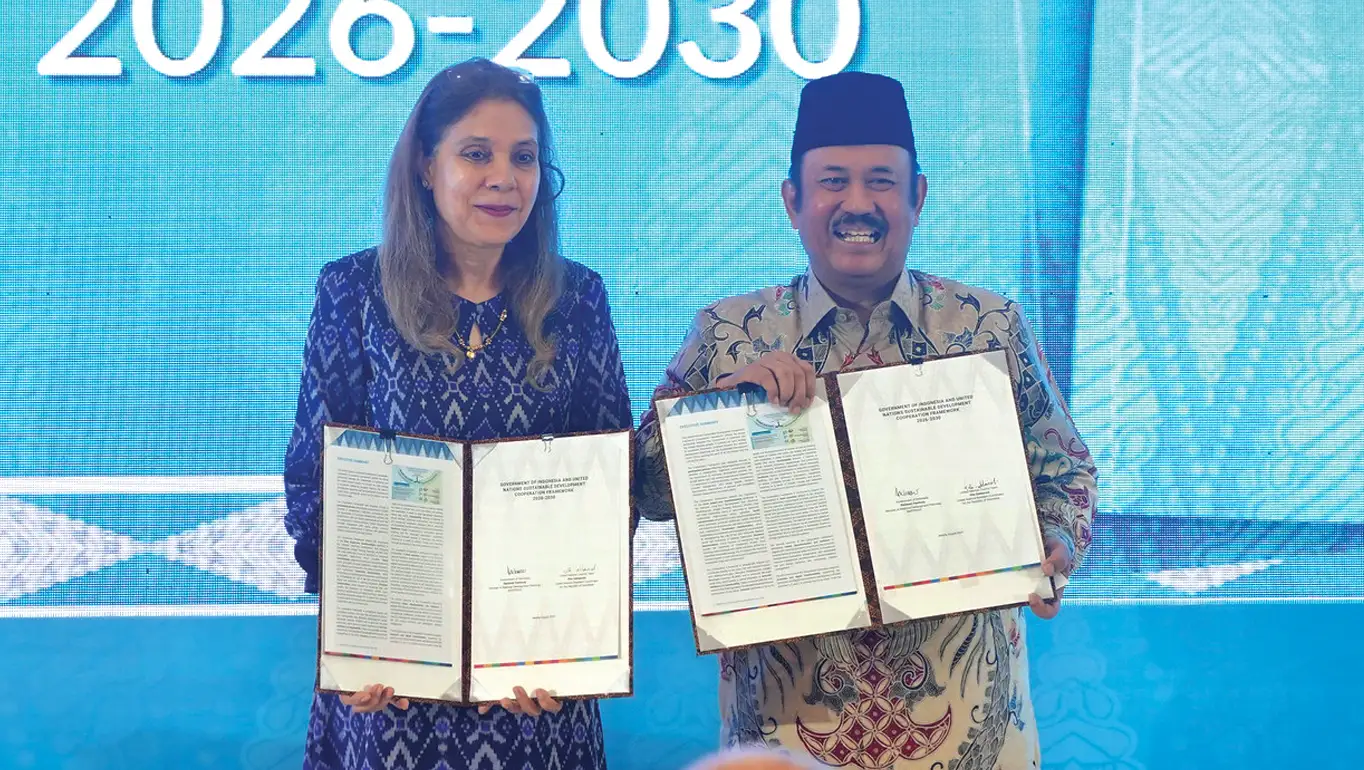
In our Sustainable Development Cooperation Framework with Indonesia, we reference this law directly in the clause on protection from sexual exploitation and abuse (PSEA). This alignment matters: it embeds PSEA in national priorities and strengthens collective accountability.
What values guide your PSEA strategy, and how have you adapted it to the local context?
We must lead by example across the UN system by upholding gender equality, respect, and a safe environment for all. Collective responsibility is non-negotiable. Every UN colleague, heads of agency, senior managers, staff, volunteers, and short-term personnel alike, must see themselves as guardians of our core principles. Protecting people from exploitation and abuse is a responsibility that cannot rest solely with technical specialists; it must be lived by all of us.
Each year, I personally review the results of the UN’s annual survey on protection from sexual exploitation and abuse with my team. The findings serve as our compass to identify gaps, clarify priorities, and tailor our strategy to what matters most for people in Indonesia. Based on the most recent results, we prioritized:
1. Deepening internal awareness;
2. Developing a unified inter-agency PSEA standard operating procedure; and
3. Strengthening the capacities of PSEA focal points and the protection from sexual exploitation, abuse, and harrassment (PSEAH) Network.
How do you and your inter-agency network engage personnel, partners, and communities on PSEA?
Our PSEA focal points are central to this work. They serve as both agency representatives and members of the inter-agency PSEAH Network. Last year’s system wide survey showed that nearly one third of respondents in Indonesia felt that focal points actively raise awareness—this is not just a statistic, but an opportunity to deepen outreach.
Through the Network, focal points also work closely with implementing partners who raise awareness of this issue among local communities. We provide training, including for faith-based leaders, who are particularly influential in Indonesia’s social fabric and play a key role in shaping norms and understanding vulnerability.
The head of my office, together with the co-chairs from IOM and UNICEF, work closely with the PSEAH Coordinator to sustain momentum.
My role is to support every focal point, staff member, and partner, because PSEA is a shared commitment.
If you could ask for one thing that would most strengthen efforts to address SEA, what would it be?
It would be this: let us move beyond compliance. Policies are essential, but they are only the starting point. Our next step is helping every UN colleague to speak about protection from sexual exploitation and abuse with confidence, empathy, and clarity, and to translate principles into day-to-day behaviors to strengthen protection.
What message would you like to share with fellow leaders?
Our credibility as leaders is measured not by what we champion when resources are abundant, but by what we protect when resources are scarce. PSEA is not optional; it is a promise we make and a reflection of who we are as an institution.
USEFUL RESOURCES
How to report sexual exploitation and abuse:
Learn more about the UN response: