


In June 2026, the International Red Cross and Red Crescent Museum enters a pivotal new chapter with the launch of an ambitious, participatory transformation of its permanent exhibition. Unfolding progressively while the Museum remains open, this initiative reflects both a strong local commitment to public engagement and a broader global ambition: to explore how humanitarian action concerns every individual, at every scale.
The new exhibition, set to be completed in 2028, will coincide with both the Museum’s 40th anniversary and the bicentenary of Henry Dunant. Conceived as an “im/permanent” space, the exhibition is designed to evolve continuously over time. Developed in collaboration with the Swiss architectural practices Baubüro in situ, Apropå and Denkstatt, the project prioritizes sustainability, reuse and co-construction. More fundamentally, it places audiences at the centre of the curatorial process, inviting them not only to visit, but also to actively contribute.
This summer, a postcard initiative invites the public to respond to a central question. Available in five languages and distributed across Switzerland and beyond, the postcards encourage contributions in any format, including drawings, texts and collages, without prerequisites. By removing barriers to expression, the Museum seeks to amplify a wide diversity of voices and lived experiences.
Visitors can also participate directly on site through dedicated workshops, as well as through outreach sessions organized throughout Switzerland, where they are invited to create their own postcards. These moments of collective reflection transform the Museum into a space of dialogue, where personal perspectives intersect with global humanitarian concerns. The contributions are not merely symbolic: they are progressively integrated into the exhibition itself, actively shaping its narrative and content. In doing so, the Museum redefines its role as a living platform for civic engagement and shared inquiry.
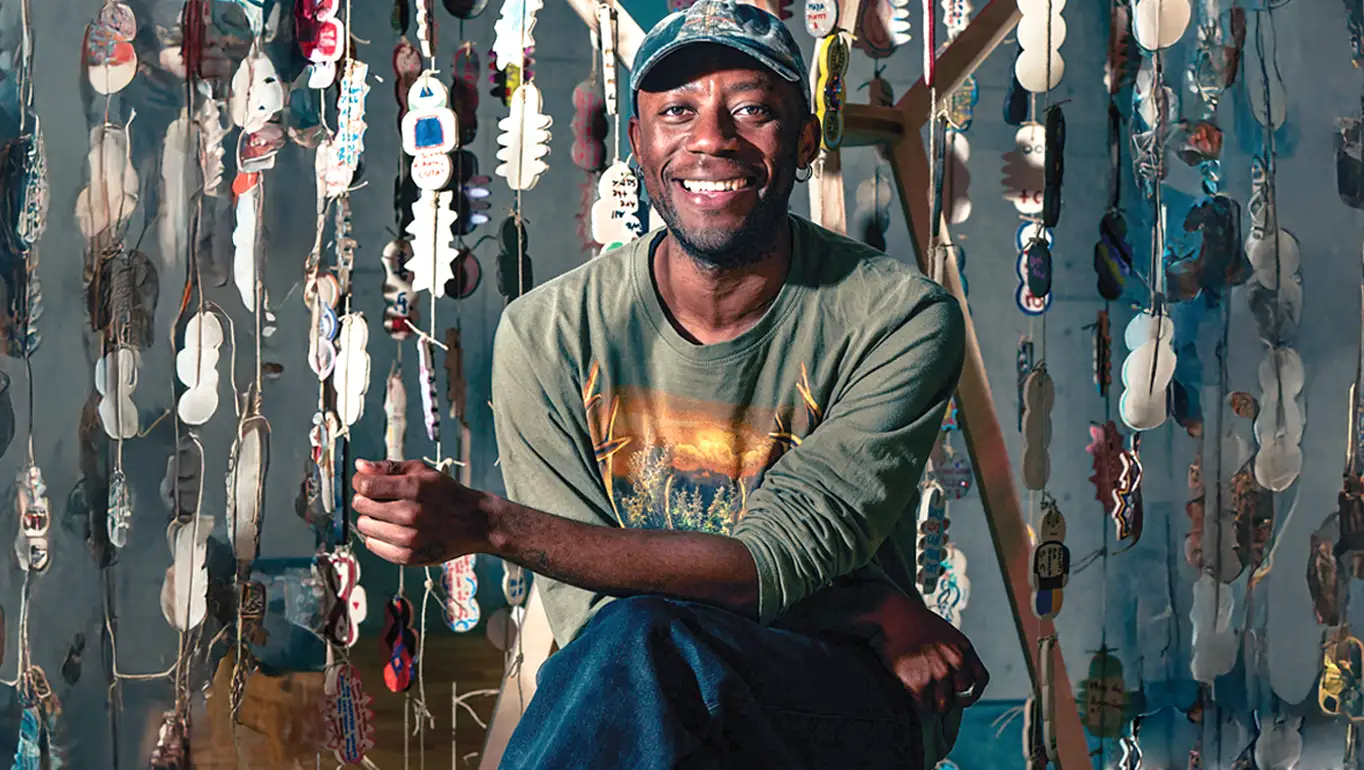
Complementing this initiative is the Museum’s annual artist residency, which further deepens the participatory dimension of its programming. In 2026, artist Arthur Sohna leads a collaborative project inspired by the figure of Eshu, a deity from the Yoruba tradition associated with crossroads, choice and transformation. Through this symbolic framework, Sohna explores how individual intentions can converge into collective energy.
At the heart of the residency is a hands-on activity open to all visitors: the creation and decoration of ceramic amulets. Infused with personal wishes and aspirations, these objects become both individual expressions and components of a larger collective work. The process is deliberately inclusive: visitors may participate independently or join sessions led by the artist, who will be present twice a week.
The residency culminates in a performative moment, during which the amulets created over the summer are brought together in a ritualized dance. This performance will take place during the Museum’s summer event on Thursday, 25 June, transforming individual contributions into a shared and embodied experience.
Through these initiatives, the International Red Cross and Red Crescent Museum offers a compelling model of participatory cultural practice. It demonstrates how local, accessible activities can resonate far beyond their immediate context.
By inviting each visitor to contribute, the Museum affirms a simple yet powerful idea: humanitarian action concerns us all, here and now.
This article was written in collaboration with the Diplomatic Club of Geneva.