


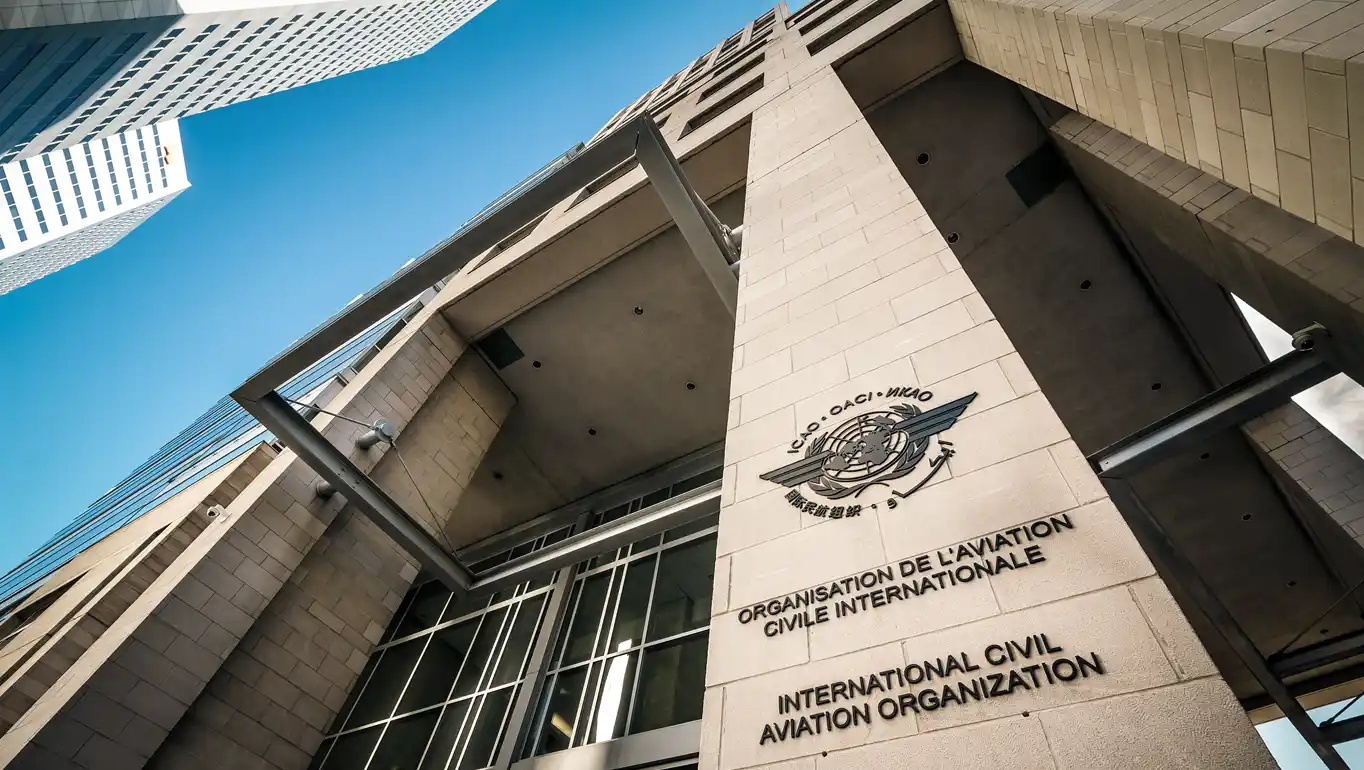
Juan Carlos Salazar is the Secretary General of International Civil Aviation Organization (ICAO), the United Nations specialized agency responsible for setting global standards and policies for aviation. With extensive experience in aviation regulation, air transport policy, and international cooperation, he leads ICAO’s efforts to support the safe, secure, efficient, and sustainable development of air transport worldwide. Read on to hear his thoughts on the key challenges and opportunities facing the aviation sector, including innovation, sustainability, and the future of global connectivity.
How is ICAO adapting its long-term strategy to meet rapid changes in global air travel demand?
ICAO’s Strategic Plan for 2026–2050 is anchored in a vision that speaks directly to the future of global aviation: air transport for all by 2050, achieved with zero fatalities and net zero carbon emissions. The ambition of this plan is only matched by the scale of growth ahead, with annual passenger volumes potentially tripling to 12.4 billion passengers by mid-century. The plan’s strength lies in its disciplined, integrative approach to these core ambitions.
First, universal access to air transport is central to ICAO’s vision. As demand rises, especially across emerging regions, ICAO is supporting every country in the regulatory, physical, and human capacity to participate fully in global aviation. This is being realized through targeted agreements for infrastructure development, expanded training programs, and new pathways for the next generation of aviation professionals. The focus on inclusivity guarantees that the benefits of connectivity extend to all economies, regardless of their starting point. Initiatives like the rollout of digital travel credentials and strengthened global cooperation ensure that advances in access are not limited to infrastructure, but include smoother, more user-friendly experiences for passengers everywhere.
Second, ICAO’s strategy recognizes that safety and security cannot be separated from growth. As passenger numbers rise and the complexity of the system increases, ICAO has made the modernization of safety and security oversight a high priority. New global safety and security plans, investment in oversight capabilities, and up-to-date frameworks for dealing with emerging opportunities (such as cybersecurity, unmanned aircraft, and advanced air mobility) all reflect a proactive stance. ICAO is also deepening the resources and programs that support States with limited capacity, facilitating uniform safety and security standards worldwide. Collaborative efforts across regions, aided by evidence-based assessment, foster a culture where safety and security gains are shared and consolidated, not left uneven.
Third, the vision of net-zero carbon emissions by 2050 is addressed through a broad coalition of environmental actions. Full support from Member States has enabled ICAO to launch and operationalize frameworks for sustainable aviation fuels, unlock new forms of climate finance, and accelerate science-based decisions on climate resilience. The creation of the Finvest Hub and the adoption of measurable targets—such as a 5% reduction in CO₂ by 2030—offer collective, transparent accountability. ICAO also works to ensure that environmental progress does not come at the expense of economic viability. Every step is intended to strengthen, rather than fragment the global air transport system as a catalyst for sustainable development.
Progress towards this vision is supported by a series of high-priority enablers. Innovation in policy and technology, continued organizational improvement, and partnerships at all levels provide the capacity to adapt as conditions of change. This also extends to diversity and workforce development, ensuring that new opportunities in aviation are equally accessible for women and across generational lines.
ICAO is creating the foundations for air transport that benefits every nation and every community through a plan that is already in action, designed to deliver results today and measured progress every year until the decade’s end and beyond.
What are the biggest geopolitical challenges currently affecting international aviation cooperation?
Geopolitical complexity is increasingly shaping the operating environment for international aviation. The most pressing challenges include: the proliferation of military threats near civilian airspace, the risks posed by advanced unmanned aircraft and navigation system jamming technologies, growing regional conflicts, and the persistent disparities in regulatory and technical capacity across different States.
International air routes now intersect with active conflict zones and militarized regions more frequently than in the past. The potential for drones, missiles, and electronic warfare systems to disrupt or endanger commercial flights has become a global concern. Civilian aircraft are vulnerable not only to intentional acts but also to misidentification or collateral effects from military activity. There is also economic disruption, with large-scale flight rerouting becoming more common, often at short notice and high cost.
To address these realities, ICAO is expanding its operational frameworks and legal instruments. The Organization is urging its Member States to rapidly share threat intelligence and improve coordination between military and civilian authorities, both to prevent attacks on civilian aircraft and to manage airspace more safely during regional crises. ICAO’s conflict zone guidance is being updated alongside its manuals for risk assessment and response to threats from military and unmanned systems, ensuring airlines and regulators have robust mechanisms for evaluating rapidly changing security environments.
At the same time, ICAO recognizes that long-term resilience depends on elevating every nation’s ability to participate fully and safely in the global network. Persistent differences in aviation oversight, infrastructure, and professional capacity are being addressed through targeted capacity development and expanded international training programs. These initiatives aim to close gaps between developed and developing States, so that all countries and their citizens can benefit from safe, secure, and reliable air transport.
Finally, the vital subject of environmental sustainability has also assumed a geopolitical dimension. Countries are expected to align around collective targets for net-zero carbon emissions, sustainable aviation fuels, and adaptation to climate change’s operational impacts. ICAO provides guidance, policy frameworks, and access to climate finance to help members progress in tandem, rather than creating new divides between those able to invest in sustainability and those struggling with resource constraints.
With the rise in AI, how is ICAO preparing for the automation in air traffic management?
ICAO is taking a strategic and coordinated approach to the rise of artificial intelligence in air traffic management. The most recent ICAO Assembly explicitly recognized both the opportunities and potential risks presented by AI. As a response, the Assembly endorsed the ICAO policy on innovation and approved the establishment of a Task Force on AI, which is assigned to develop comprehensive implementation strategies for aviation security. Emphasis is being placed on the creation of standardized certification frameworks and AI-specific performance evaluation methodologies.
Automation and the integration of AI are reflected in the latest Global Aviation Safety Plan and the new cycle of the Global Air Navigation Plan, both endorsed by the Assembly. These documents establish frameworks to upgrade oversight, accelerate innovation, and enhance the capacity to manage both traditional and new forms of air traffic. ICAO is also working to expedite measures for the legally compliant and safe operation of remotely piloted aircraft systems and advanced air mobility vehicles, which will rely heavily on automation.
Through the expansion of the TRAINAIR PLUS program, and regional and global cooperation, ICAO is supporting Member States in building the skills and human resources needed to manage advanced, automated systems. The focus on digital transformation and innovation, highlighted as a global priority, ensures that ICAO’s approach to automation in air traffic management is both inclusive and future-oriented.
ICAO’s preparation relies on upgrading oversight, investing in skills, accelerating innovation through new partnerships and financial tools, and aligning Member States behind common strategies that ensure automation in air traffic management supports safety, security, efficiency, and broader access across the global aviation network.
How realistic is the aviation sector’s path to net-zero emissions by 2050?
A remarkable alignment of political will, technological progress, and international partnership is driving the aviation sector’s trajectory toward net-zero carbon emissions by 2050. This progress is supported by ICAO’s consolidated framework for coordinated policy, investment, and innovation, all dedicated to decarbonizing international air transport, which guides our 193 Member States and industry stakeholders.
The foundation for this ambition lies in a longstanding culture of global dialogue and action, beginning with ICAO policies that have gradually transformed aircraft design and operations to advance fuel efficiency since the 1960s. Air transport continues to adopt collective ICAO global aspirations, including the achievement of net-zero carbon emissions by mid-century. This will also contribute to progress towards the temperature goals of the Paris Agreement.
ICAO Member States and the aviation industry work in a spirit of cooperation that recognizes the diverse stages of economic development and varying aviation market maturity worldwide. ICAO policies ensure the way forward remains inclusive, with each State able to determine its own contributions, always informed by its unique circumstances and respective capabilities. This flexibility drives engagement across all regions, opening doors for shared solutions and tailored technical support.
The technological pathway to net-zero is already visible.
Fast-growing investment in new aircraft, advanced aerodynamics, efficient propulsion systems, and data-driven operational improvements is delivering measurable gains.
Sustainable aviation fuels (SAF) will also play a key role in this journey, as they are expected to offer over half of the needed reductions in carbon emissions.
Clarity for markets and investors is provided by ICAO’s Global Framework for SAF, lower carbon aviation fuels (LCAF), and other cleaner aviation energies. This Framework sets out a shared vision of reducing emissions through the growing adoption of these fuels.
The ICAO vision to realize a five per cent reduction in international aviation’s CO₂ emissions by 2030 through cleaner energies is at the heart of this transition. Sustainability criteria and certification systems designed and overseen by ICAO ensure these fuels meet rigorous global standards, creating additional confidence for innovation and deployment.
Scaling up cleaner energy solutions requires dedicated investment. Projections indicate the need for substantial capital to build production capacity, develop supply chains, and foster the necessary infrastructure. ICAO supports this through structured engagement with institutional investors, public sector finance, and private capital. Tools such as the ICAO Finvest Hub facilitate connections between project developers and potential funding sources, especially in States where access to capital can magnify the pace and reach of sectoral transformation. ICAO programs such as Assistance, Capacity-building and Training for Sustainable Aviation Fuels (ACT-SAF) and the evolving Assistance, Capacity-building and Training program designed to help States implement measures toward achieving the Long-Term Global Aspirational Goal (ACT-LTAG) provide practical, hands-on support for policy development, technology transfer, and capacity building, enhancing readiness and resilience in every region.
Market strategies are further amplifying progress. The Carbon Offsetting and Reduction Scheme for International Aviation, or CORSIA, incentivizes emissions reductions and sustainable growth. It complements technical and operational measures by creating a consistent, transparent mechanism for managing growth and supporting decarbonization.
Continuous monitoring is integral to success. ICAO’s monitoring and reporting tools collect and analyze data, track implementation of emissions reduction measures, and provide stocktaking platforms for scientific and economic information. This real-time feedback system enables early identification of best practices and emerging opportunities and maintains momentum toward the sector’s global long-term aspirations.
ICAO’s commitment to “No Country Left Behind,” which is a strategic goal under our plan for 2050, shapes every phase of this journey. By fostering international partnerships and targeting assistance in capacity development and technical expertise, ICAO ensures that all States can benefit from and contribute to global decarbonization efforts. The collective approach is visible in the extraordinary voluntary response: currently, 154 States representing over ninety-nine per cent of global air traffic have submitted action plans detailing their path to greater environmental sustainability.
Aviation’s net-zero future builds upon a robust, cooperative history and a present defined by practical progress, steady investment, and harmonized international policies. The sector continues to demonstrate that global mobility, economic opportunity, and environmental stewardship can advance together through shared resolve and strategic innovation. With these foundations, the path to net-zero emissions remains both realistic and increasingly closer.