


In the face of complex environmental crises and geopolitical tensions, history shows us that the international community can unite to cooperate on shared environmental challenges, even under the most difficult circumstances.
When scientists in Europe understood that the acid rain was responsible for the dieback of forests and loss of life in lakes was caused by air pollution that traveled thousands of kilometers, it became clear that only collective action would suffice.
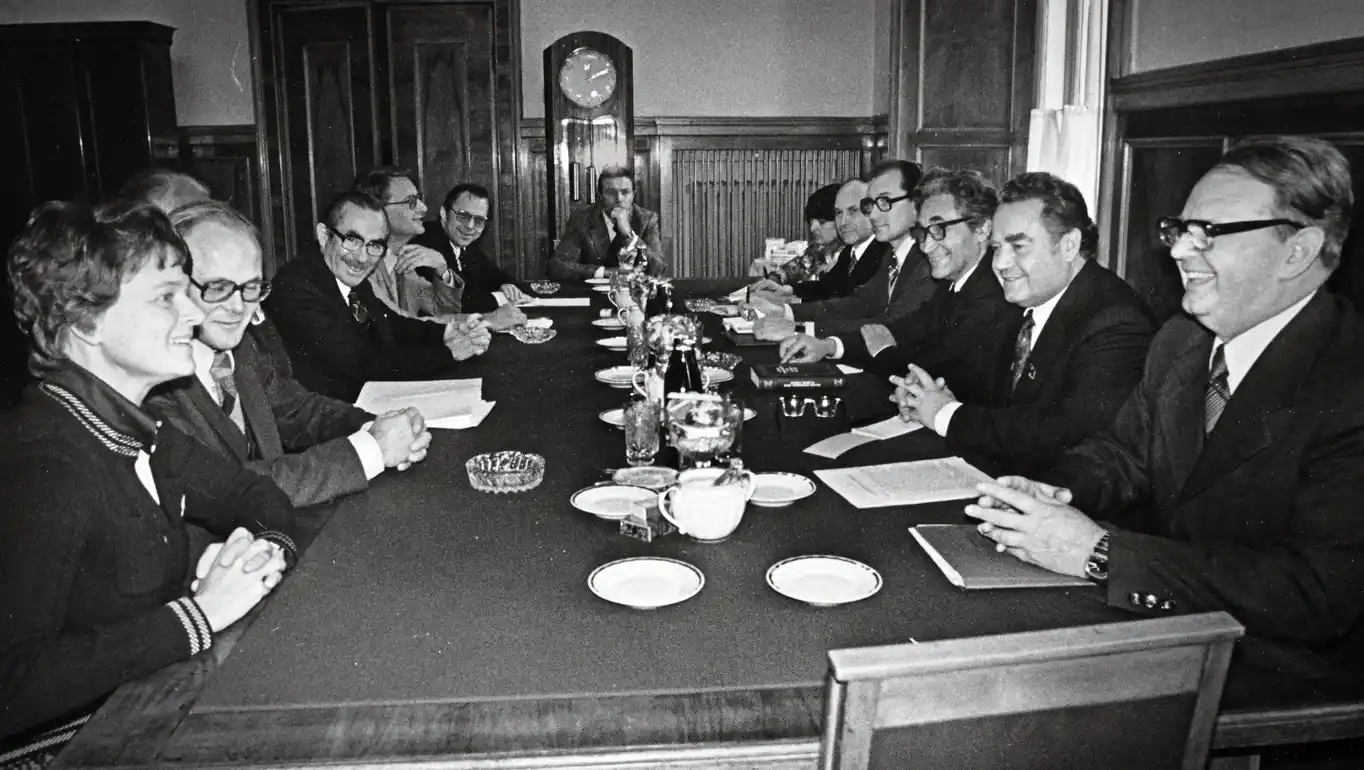
So, at the height of the Cold War in 1979, 32 states from both sides of the Iron Curtain, including the Soviet Union, the majority of Western European countries, the US and Canada, signed the UNECE Convention on Long-range Transboundary Air Pollution, the first international treaty to address air pollution on a broad regional scale.
It set the stage for coordinated international action, scientific collaboration, and evidence-based policymaking to protect both people and the planet.
Why the Convention matters for people and the planet
With 51 Parties and 8 Protocols today, the Convention has developed into a highly successful legally binding regional framework that links science and policy to reduce damage by air pollution to human health, the environment and the economy.
The achievements of the Parties to the Convention over the last 45 years have been no less than remarkable: emissions reductions by 40-80% since 1990, healthier forest soils, one additional year of life expectancy, and 600,000 premature deaths avoided annually in the region. The Convention also supports integrated approaches for clean air and climate action, addressing pollutants that affect both air quality and climate change, including black carbon (soot) and ground-level ozone precursors.
However, there are many more challenges still to be tackled to reduce air pollution in the region. Recent findings from the Convention’s scientific bodies show that failing to act on air pollution is dramatically more costly than investing in clean air policies, with “business as usual” costing up to 25 times more and current health, ecosystem, and economic damages exceeding 5% of GDP in nearly half of assessed countries in the region.
The Convention is therefore continuing to innovate and intensify its efforts to achieve further reductions in air pollution. Parties have agreed to pursue a revision of the Protocol to Abate Acidification, Eutrophication and Ground-level Ozone or “Gothenburg Protocol,” which addresses multiple pollutants simultaneously, to make it even more effective, to address gaps, and to ensure broader participation and implementation of its provisions, particularly by countries in Eastern Europe, the Caucasus and Central Asia.
Given that air pollution stems from diverse sources, involves numerous pollutants and triggers wide ranging impacts on human health and ecosystems, effective action demands coordinated, cross-sector collaboration. It is therefore only natural that the Convention maintains close cooperation with other UNECE and global environmental agreements, e.g., on the effects of air pollution on water ecosystems with the Water Convention, and on access to emission data and Pollutant Release and Transfer Registers (PRTRs) with the Aarhus Convention and its Protocol on PRTRs, among others.
Looking ahead
Air pollution is not only a regional problem, but also a global one. Seven million people die worldwide annually due to air pollution, according to WHO. The associated high costs of damage, both to health and the environment, have become an economic issue affecting economies everywhere. According to the OECD, the estimated economic cost of air pollution is increasing and could rise to 1% of global GDP by 2060, around $2.6 trillion annually, as a result of sick days, medical bills and reduced agricultural output, unless further action is taken.
From choking smog in India to toxic air in cities around the world, people on all continents are increasingly affected by severe air pollution. While the Convention remains the only regional treaty regulating air pollution anywhere on earth, policy makers in other regions, especially in East and South Asia, but also in South America, are looking to learn from the experience of the Convention. With its 45-year track record, the Convention could provide a model for other regions. To support action worldwide, the Convention will further share its experience and scientific expertise and strive to play a key role in the development of further policy cooperation between regions in the future.
For 45 years, the Convention has proven that cooperation works, also in difficult times. Its combination of science, diplomacy and practical policy action has shown that action for clean air pays off by saving lives, ecosystems and money, while building bridges between countries. As environmental challenges grow more interconnected, the Convention’s legacy, and its future role, remain essential to ensuring cleaner air and a healthier planet for generations to come.