


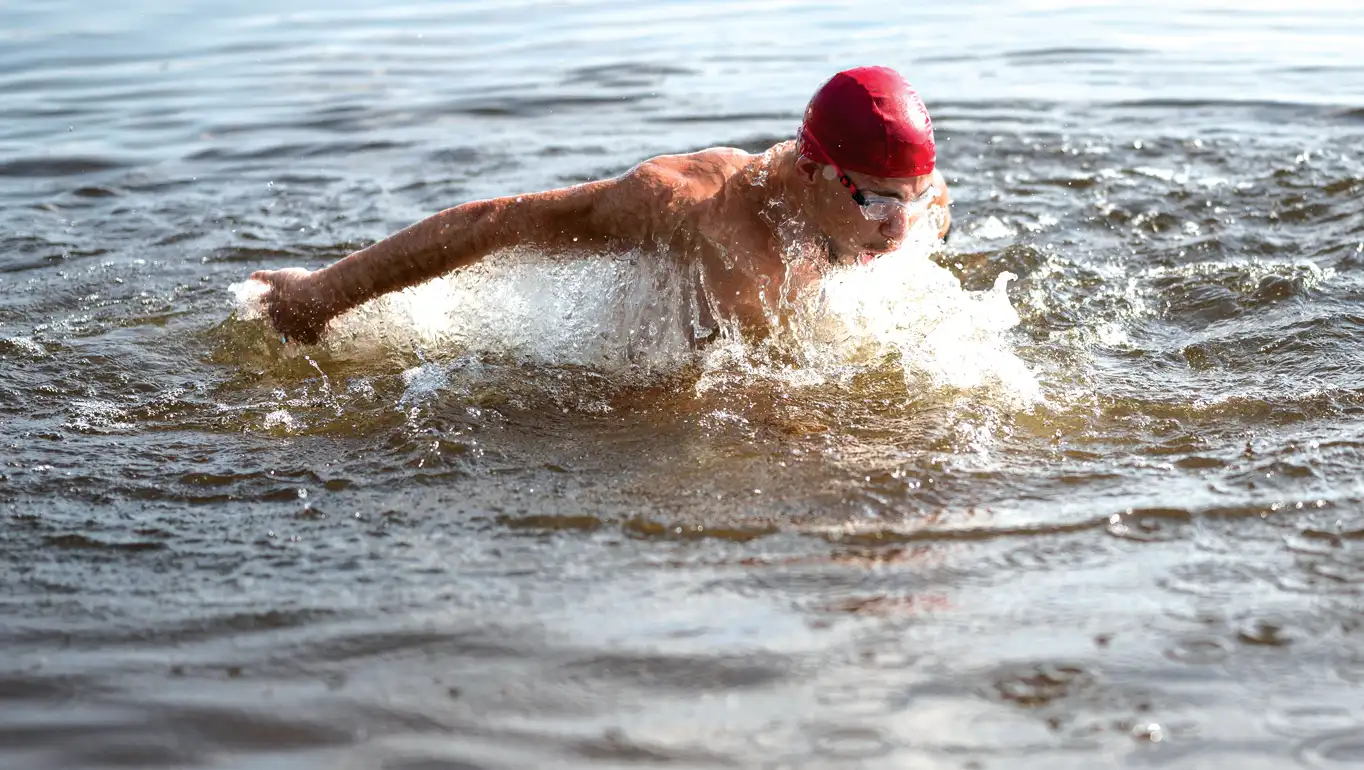
Anyone up for a swim? You might say yes if it was heated, with easy access to a warm shower or a sauna, but would you say yes, if asked in winter in 5°C water?
The chances are that the majority would refuse, but you might just surprise yourself, and subsequently revel in the wonders it can do to your physical and mental health.
One step at a time
The main battle is the first step into the water- that horrible moment of discomfort. The next few steps become easier and easier and once your shoulders are in, a feeling of euphoria takes over.
For others, flight mode may kick in and before you know it, you’ll find yourself retreating back to your warm towel. But you never know until you try!
The good news for fair-weather swimmers is that the warmer months are now here (in Europe!), which means the challenge to get into your swimming suits and brave the cold waters is less daunting. The hardy winter swimmers will be wishing for quieter pools and changing rooms, but the sun makes the whole experience better for everyone.
By starting now as the weather warms up our outdoor pools, seas and lakes, you can build cold water swimming into your routine. Whether you continue that once winter beckons is another story…
Let’s get physical
Cold water swimming benefits have been kicking around for a while (no pun intended), but what are the scientific facts behind this?
Firstly, it is worth noting that this is not for everyone. Cold water exposure can stress out the cardiovascular system, so if you suffer from a heart condition or other medical problems, it is worth checking with your doctor before starting.
One of the main benefits it has to your physical health is improved circulation. This is because the body performs a “vascular workout” as the cold water causes blood vessels to constrict then dilate as you warm up. In addition, you might find that your body can regulate its own temperature more efficiently and over time, regular cold water swimming can lower blood pressure.
Studies have correlated a stronger immune system with cold water swimmers as white blood cells increase. This reduces the impact of habitual colds, likelihood of infection and ensures a generally more robust internal defence system.
Athletes often use ice baths to recover their muscles after sporting events, this is due to the defamatory effects of cold water on the muscles, reducing soreness and speeding up recovery periods. The first reported claims for this date back to 400 BC; Hippocrates was known to treat fatigue with water therapy.
On the other hand (and foot!) is the low-impact cardio exercise that comes with swimming. It does not put stress on bones and joints in the same way that other sports can. Is there really no downside?
Impacts on the psyche
The positive effects of cold water therapy on the human brain has been widely reported, to the extent of anti-depressive. Improvements to mood and reduction in depressive thoughts link to the increase in the catecholamines (molecules that act as chemical messengers for dopamine, noradrenaline and adrenaline) as a result of the body’s response to cold water exposure.
All forms of exercise can evoke this response, but for some, the extreme reaction the body has to cold water surpasses the positive impacts of other physical activity.
Some other benefits include improved sleep quality and regulation as a result of the aforementioned chemicals activating the sympathetic nervous system. Regular cold swims could be the answer to your sleep prayers!
In general, improved energy and alertness is a bonus, awakening the mind as well as the senses. Once the brain has been flooded with adrenaline and noradrenaline, a sense of mental clarity can last for hours as these chemicals sharpen focus and reaction times, increase attention span and reaction speed and reduce “brain fog.”
The sport of ice swimming
Certainly more common in northern countries, winter or ice swimming is taken seriously by extreme athletes pushing their bodies to the extreme. Ice swimming can only be done where freezing temperatures remain no matter the time of year. The International Ice Swimming Association (IISA), founded in 2009, has conducted 42 official ice swimming competitions around the world since it was founded by South African swimmer Ram Barkai, who kickstarted the ice-miles movement.
This is where swimmers can compete in a 1608m race in maximum 5°C water in only a swimming costume, hat and goggles.
The Ice Mile was rejected by the International Olympic Committee for inclusion in the Winter Olympics in both 2018 and 2022, but the community remain hopeful as the sport gains traction in the wellness and competitive spheres.
Leisure and pleasure
Unlike many trends and fads, this one is here to stay. Whether it is in the many lakes, pools, rivers and seas, the undeniable benefits of cold water speak for themselves.
And if that wasn’t enough to inspire you, perhaps the words of Wim Hof, founder of the Wim Hof Method will: “Use the cold well, and you bring the immune system, the energy system and your cardiovascular system to an optimum [state].”