


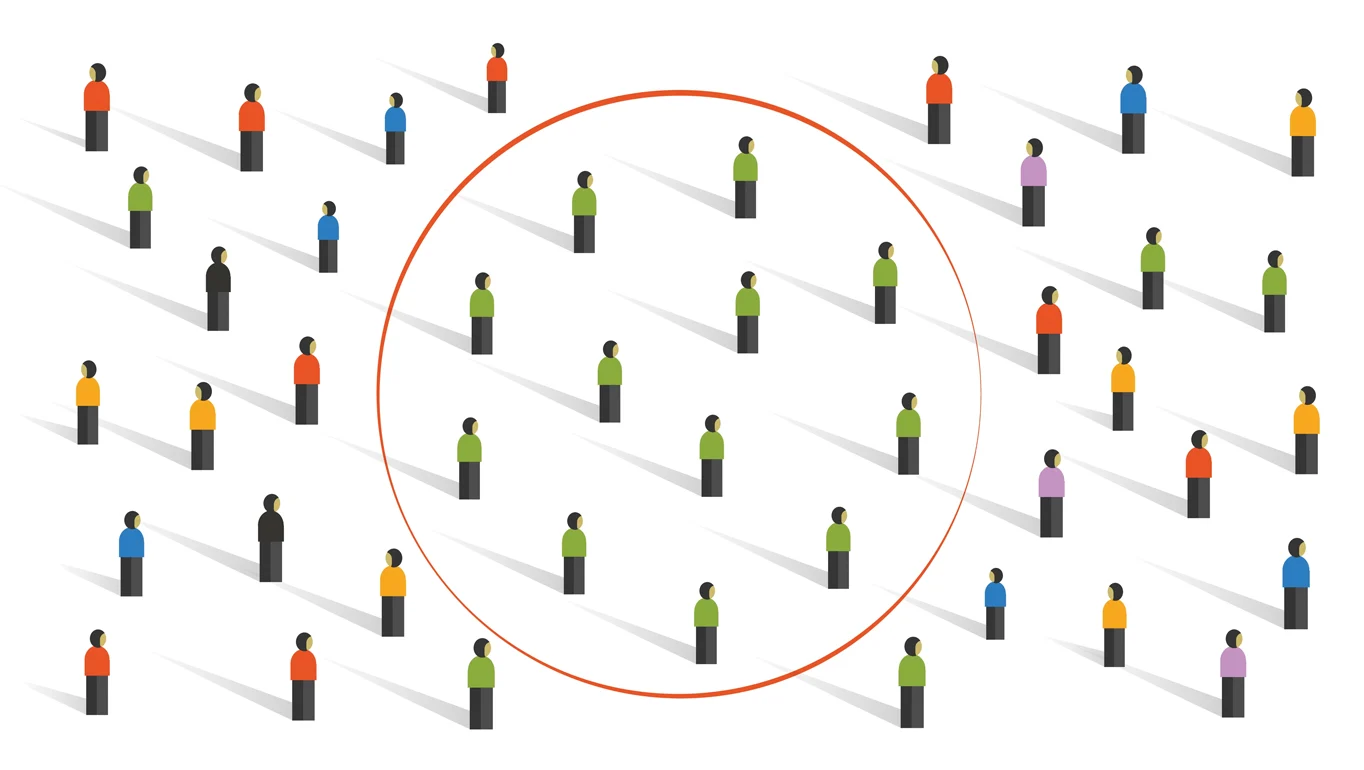
The idea of “building your tribe” may feel comforting, partly as it’s human nature to feel more comfortable among those who think like us, share our values, and validate our experiences. In international diplomacy, though, this instinct can be limiting. Whether consciously or not, we all construct echo chambers. Consider the articles you read, the conferences you attend, or even the colleagues you feel most at ease with. When was the last time you engaged with ideas that fundamentally challenged your worldview?
Diverse perspectives don’t just enrich the conversation, they lead to better outcomes, such as stronger policy, deeper cooperation, and more resilient institutions.
Why echo chambers are risky
Echo chambers are environments where dissenting opinions are minimized or excluded, thus creating a false sense of consensus. Within diplomatic and policymaking circles, this can be particularly dangerous. When teams are composed of like-minded individuals, the result is often confirmation bias: selectively seeking information that supports existing assumptions while filtering out contradictory data.
For example, take climate policy.
A diplomat dealing with environmental negotiations may mostly interact with stakeholders, reports, or think tanks that align with their national stance, whether it is aggressive mitigation or cautious adaptation. This can inadvertently narrow their exposure to alternative approaches, regional priorities, or new scientific findings.
We often associate this behavior with “groupthink,” a term coined by psychologist Irving Janis in the 1970s to describe the prioritization of consensus over critical evaluation. Janis used the example of the 1961 Bay of Pigs invasion as a cautionary tale: key voices in President Kennedy’s inner circle muted their doubts to preserve unity, resulting in flawed decision-making and diplomatic fallout. While the stakes and settings differ, the mechanism is the same. The pressure to conform overrides the need to question.
Now, consider the Paris Climate Agreement. This is a great example of how embracing diverse perspectives led to an unprecedented level of international cooperation. Rather than prescribing universal targets, the agreement introduced a bottom-up framework, allowing countries to set their own Nationally Determined Contributions (NDCs) based on their capabilities, contexts, and ambitions. This shift from uniformity to flexibility made this one of the most broadly supported climate frameworks in history.
The Paris Agreement succeeded in large part because it made room for differing national realities. It reframed climate action not as a monolith, but as a mosaic allowing each country to uniquely contribute. This approach created space for innovation, accountability, and iterative progress.
How to broaden your perspective
The ability to integrate diverse viewpoints is a form of strategic intelligence and can greatly enhance your influence.
1. Recognize the risks of homogeneity
In his book Think Again, Adam Grant talks about the danger of intellectual complacency. He writes that we often mistake agreement for truth, and comfort for accuracy. Actively questioning your own assumptions isn’t a threat to expertise; instead, it’s a hallmark of it.
2. Seek diverse thinkers
Practice engaging with experts outside your domain or region. Attend cross-sector forums. Read media sources beyond your regular scope. Forming relationships with people who bring different cultural, political, or professional lenses will surface blind spots you didn’t know you had.
3. Build your personal “board of advisors”
Surround yourself with a few trusted individuals who will challenge your thinking, not just affirm it. Choose people with varied backgrounds, and most importantly, invite critique.
4. Embrace productive disagreement
Great decisions are rarely born from harmony alone. Model curiosity. Ask more than you assert. Set the tone in meetings by welcoming opposing viewpoints and normalize the act of re-evaluating decisions.
5. Use frameworks that encourage balance
Sometimes diverse voices are invited, but not truly integrated. Tools like Edward de Bono’s ‘Six Thinking Hats’ or scenario planning models can help structure discussion around multiple perspectives such as optimistic, cautious, data-driven, emotional, etc., preventing dominant voices from steering decisions unilaterally. Getting used to such tools in group meetings is beneficial as they bring all voices into the conversation and allow for all scenarios or approaches to be examined.
Diverse perspectives don’t dilute outcomes; they sharpen them. They reduce risk, improve policy relevance, and foster the kind of global collaboration we need more than ever. After all, a popular saying in leadership circles (often attributed to General George S. Patton) goes: “If everyone is thinking alike, then somebody isn’t thinking.” Next time you enter a discussion, ask yourself whose perspective is missing and what might it cost us not to hear it? The ability to listen, adapt, and include others may be the most diplomatic act of all.