


I spent 20 years working full time as an English and writing skills trainer at the United Nations in Geneva, in what is now called the Centre for Learning and Multilingualism. Before that, over a ten-year period, I worked as a consultant, coming to Geneva on and off while finishing my PhD and teaching in the training center.
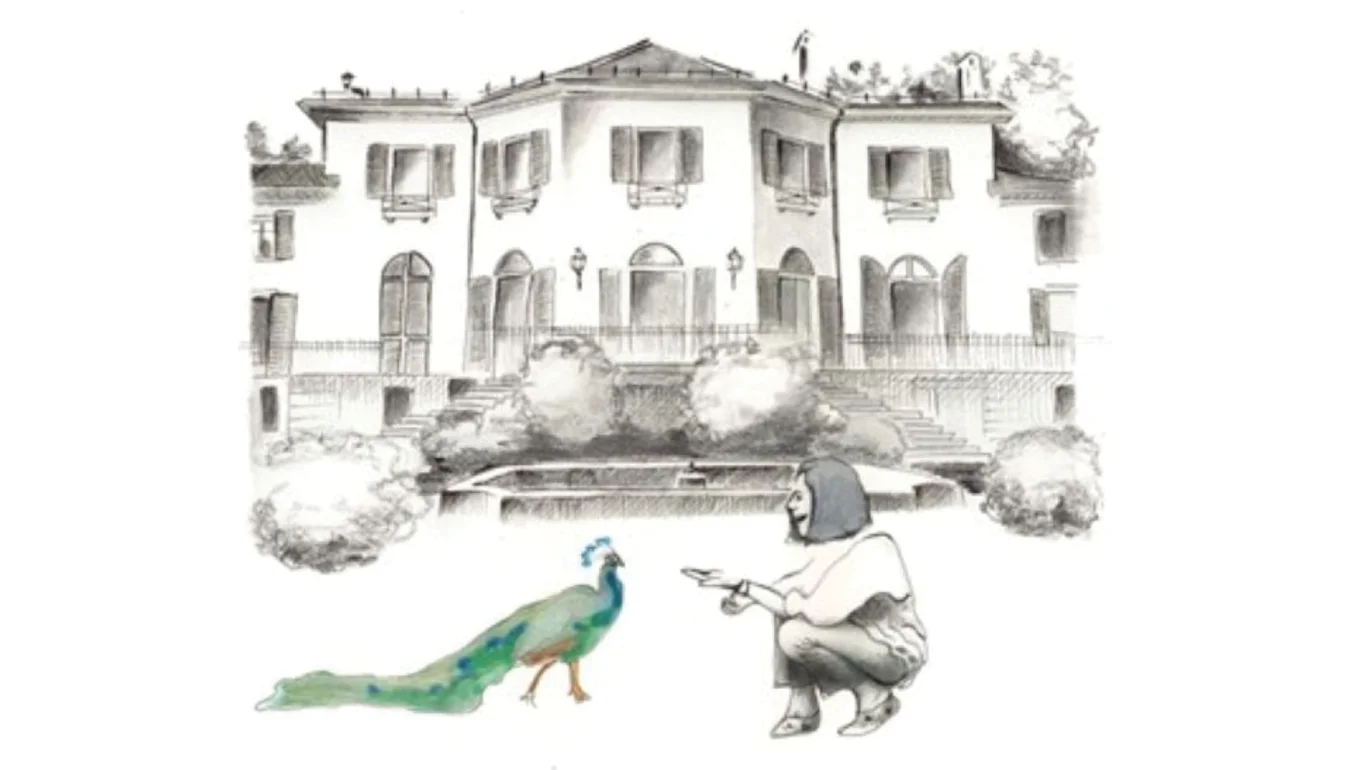
I applied for the full-time position in 2001 and started the very same week as 9/11, which made it an especially memorable beginning. In those early years, we taught in the beautiful historic Villa le Bocage, then spent a year teaching out of a car park, before moving up the hill to the Annexes le Bocage. After my retirement, my former colleagues moved again, this time to Building H.
Over the years, I learned so much from my students that I decided to write a memoir to record their experiences. My own section focused on preparing candidates for competitive exams for Professional and General Services posts, as well as on language proficiency exams, which I try to explain in clear and simple terms. I wanted people who have worked at the UN to better understand what goes on in other sections, and those outside the organization to gain insight into its inner workings.
My career coincided with periods of both downsizing and expansion, as well as a major shift from in-person to online training. We began with textbooks and a computer center, and eventually moved all our courses onto an e-learning platform: Moodle. One constant throughout was training in the UN’s six official languages:
Arabic, Chinese, English, French, Russian and Spanish. Our students came from across the UN Secretariat, agencies, and diplomatic circles.
A major challenge was continually adapting our programs to changing needs and keeping pace with technological developments. Over time, students arrived with increasingly strong English skills and needed more advanced support in writing and presentations.
In response, we developed specialized programs, particularly for human rights lawyers. Like many workplaces, the UN underwent profound changes as automated administrative systems were introduced, forcing staff to reinvent themselves and rethink their career paths. During the COVID-19 pandemic, I taught online, and our classes became an important source of connection for staff who were isolated in Geneva without their families.
I titled my book ‘Behind the Flags’ because I encountered thousands of UN staff members, each with their own stories and lived experiences, many of which they shared in the classroom. I felt these stories offered a fascinating glimpse into the world behind the scenes at the UN. Life inside the organization can seem mysterious to outsiders, and I wanted to make everyday UN life more accessible to the general public. At the same time, staff members within the UN are often curious about what happens in other sections, especially since mobility is encouraged. Many people came to our classes not only to improve their language skills but also to meet colleagues from other departments and learn about their working lives.
The stories shared ranged from tales of the mythical ghost in the UN library, to anecdotes about the regulations of living in Geneva, to deeply moving accounts from people fleeing war. My students came from every level of the hierarchy: chauffeurs, gardeners, and security guards, as well as ambassadors, human rights lawyers, economists, and General Services staff. In the classroom, hierarchy was left at the door.
Beyond the professional world inside the flags, I also write about life outside them: where staff and their families live, how they educate their children, and what it means to build a life in Geneva or neighboring France. I also cover retirement, how the process works, and the decisions staff members face as they prepare for that transition.
The illustrations for the book were done by a talented Australian artist, Christine Lefeaux. I sent her photographs, which she then transformed into beautiful illustrations.
Publishing the book came with its own challenges. I quickly realized that traditional publishing houses were not a good fit, as they would shape the content to suit their own readership, whereas my audience is global and highly diverse.
I took a course on self-publishing and learned how to prepare my manuscript for platforms like Amazon and others. It was a demanding process, but for anyone wishing to self-publish simply and ethically, I recommend lulu.com as an excellent way to produce an initial draft and learn the steps involved.