


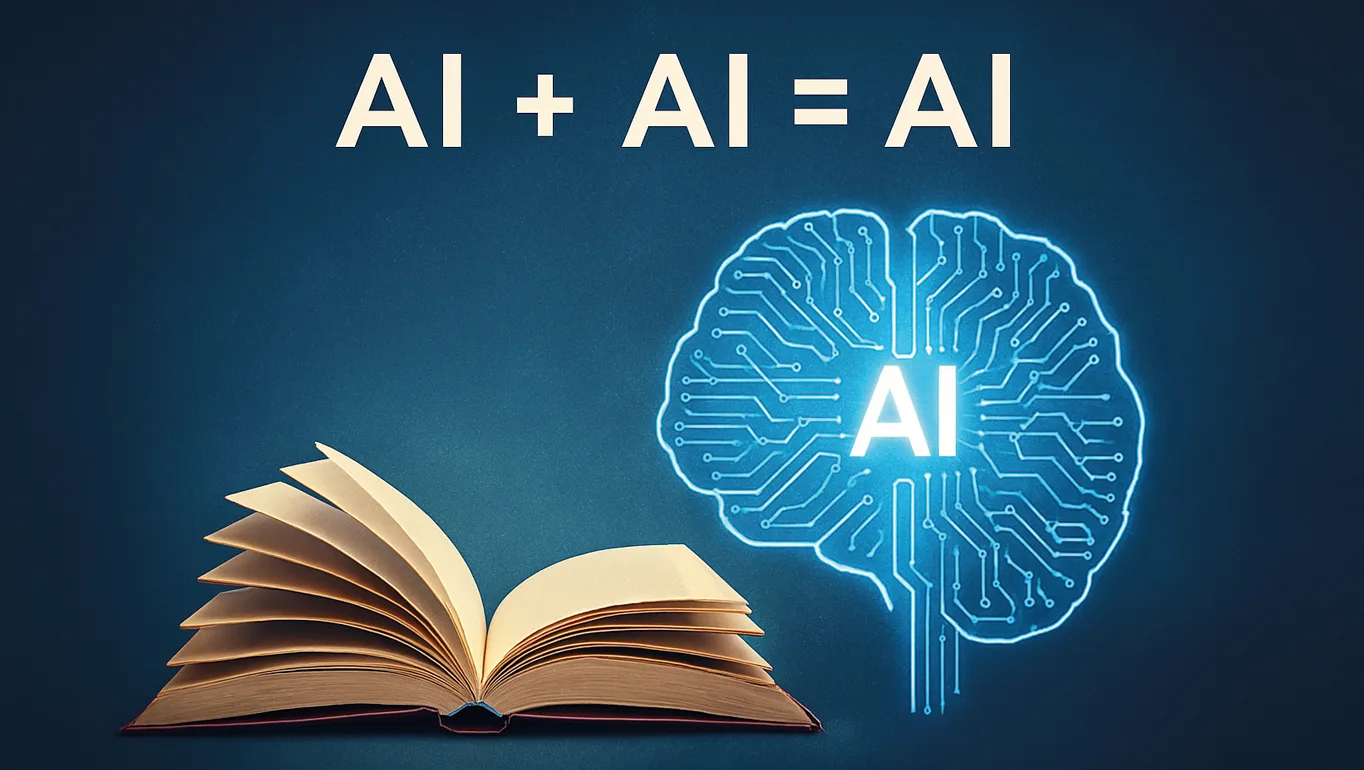
In today’s fast-changing, AI-driven world, academic institutions are no longer simply places for teaching and learning. They are evolving into powerful engines of innovation. The expression “AI + AI = AI” captures this transformation. It suggests that Artificial Intelligence (AI) embedded within Academic Institutions (AI) creates A new era of Innovation (AI). In this era, traditional learning models are enhanced by advanced AI tools, reshaping education, research, and knowledge creation. This synergy is also central to achieving the goals of the United Nations’ 2030 Agenda.
At first glance, the title AI + AI = AI may seem intriguing or even puzzling. However, it reflects the profound impact of integrating artificial intelligence into academia. This shift is not just a technological upgrade. It represents a fundamental rethinking of how education, research, and institutional systems function in a rapidly evolving world.
Why AI, and not just digital technology?
Artificial intelligence stands apart from conventional information and communication technologies (ICTs).
While traditional digital tools primarily process data and automate routine tasks, AI is designed to replicate and extend human intelligence.
AI systems can perform complex functions such as understanding natural language, recognizing patterns, solving advanced problems, enabling autonomous vehicles, and making predictive decisions in previously unexplored areas. These capabilities are transforming everyday life and reshaping entire industries.
In education, AI is not simply an add-on. It acts as a catalyst for innovation. It is changing how knowledge is created, processed, and shared, enabling more dynamic, responsive, and impactful learning environments.
Integrating AI into academic institutions
As artificial intelligence becomes increasingly dominant, its integration into academic institutions is no longer optional. It is essential. AI’s ability to process vast amounts of data quickly allows educators and researchers to generate insights, improve teaching and learning, and focus on solving meaningful societal challenges.
To guide this transformation, UNESCO introduced two major AI competency frameworks during Digital Learning Week from 2 to 5 September 2024. One framework is designed for students and the other for teachers. These frameworks aim to promote the safe, ethical, and responsible use of AI in education.
The AI Competency Framework for Students prepares learners to become responsible and creative participants
in the AI era. It is structured around twelve competencies that span four key areas, including a human-centered mindset, AI ethics, AI techniques and applications, and AI system design. These competencies develop progressively across three levels, which are Understand, Apply, and Create. This structure encourages learners to think critically and evaluate the broader social, economic, and environmental impacts of AI.
Complementing this, the AI Competency Framework for Teachers defines the knowledge, skills, and values educators need to integrate AI effectively and ethically. It emphasizes maintaining a human-centered approach while ensuring that meaningful human interaction remains central to learning. The framework outlines fifteen competencies across five areas, including a human-centered mindset, AI ethics, AI foundations and applications, AI pedagogy, and AI for professional development.
These are organized into three progressive stages, which are Acquire, Deepen, and Create. This approach supports continuous professional development and helps educators navigate the evolving relationship between students, teachers, and AI.
A new era of innovation
The integration of AI into academia is creating a new educational paradigm. Institutions are shifting from being passive repositories of knowledge to becoming dynamic hubs of innovation, discovery, and problem-solving.
AI enables personalized learning experiences, accelerates research, and improves institutional efficiency. At the same time, it challenges traditional ideas about the purpose of education and aligns it more closely with the demands of the 21st century.
To successfully embed AI in academia, several key elements must be addressed. Curricula need to be redesigned to incorporate AI literacy and ethics across disciplines so that all students develop a foundational understanding of AI. Institutions should establish interdisciplinary research and innovation centers that apply AI to areas such as healthcare, climate change, agriculture, and energy. Strong governance frameworks are also necessary to ensure ethical use, data protection, and accountability. Continuous monitoring and evaluation are required to assess learning outcomes, inclusion, and environmental impact. In addition, meaningful partnerships with governments, industry, and communities are essential to support innovation and ensure that AI applications address real-world challenges.
When implemented responsibly, AI can promote creativity, equity, and sustainability. It positions academic institutions as key drivers of social progress and contributors to the Sustainable Development Goals.
Despite its potential, integrating AI into education presents significant challenges. One of the most pressing issues is the digital divide. UNESCO warns that rapid AI adoption could concentrate benefits among well-resourced institutions while leaving others behind.
Globally, many schools still lack basic infrastructure. For example, one in four primary schools has no access to electricity, and only about half of lower secondary schools have internet connectivity. In such contexts, AI adoption risks widening existing inequalities rather than reducing them.
There is also the risk of misallocated resources. Investments in advanced AI technologies may divert attention and funding away from essential needs such as infrastructure, teacher training, and basic learning materials, particularly in under-resourced regions.
Another major barrier is the lack of clear policy guidance. Only a limited number of countries have incorporated AI into national curricula or developed structured training programs for educators. As a result, many teachers lack the support needed to use AI effectively in the classroom.
These challenges highlight the urgent need for inclusive policies, capacity building, and international cooperation to ensure that AI narrows rather than widens global education gaps.
AI in academia is fostering a new generation of thinkers and problem-solvers who are equipped to use technology for the benefit of society.
As we move further into this new era, the integration of AI and academic institutions will redefine education and research in ways that are only beginning to emerge. It pushes the boundaries of traditional learning and transforms how institutions prepare students for future challenges.
In this context, AI is no longer just a tool. It is a central force shaping the future of global progress.