


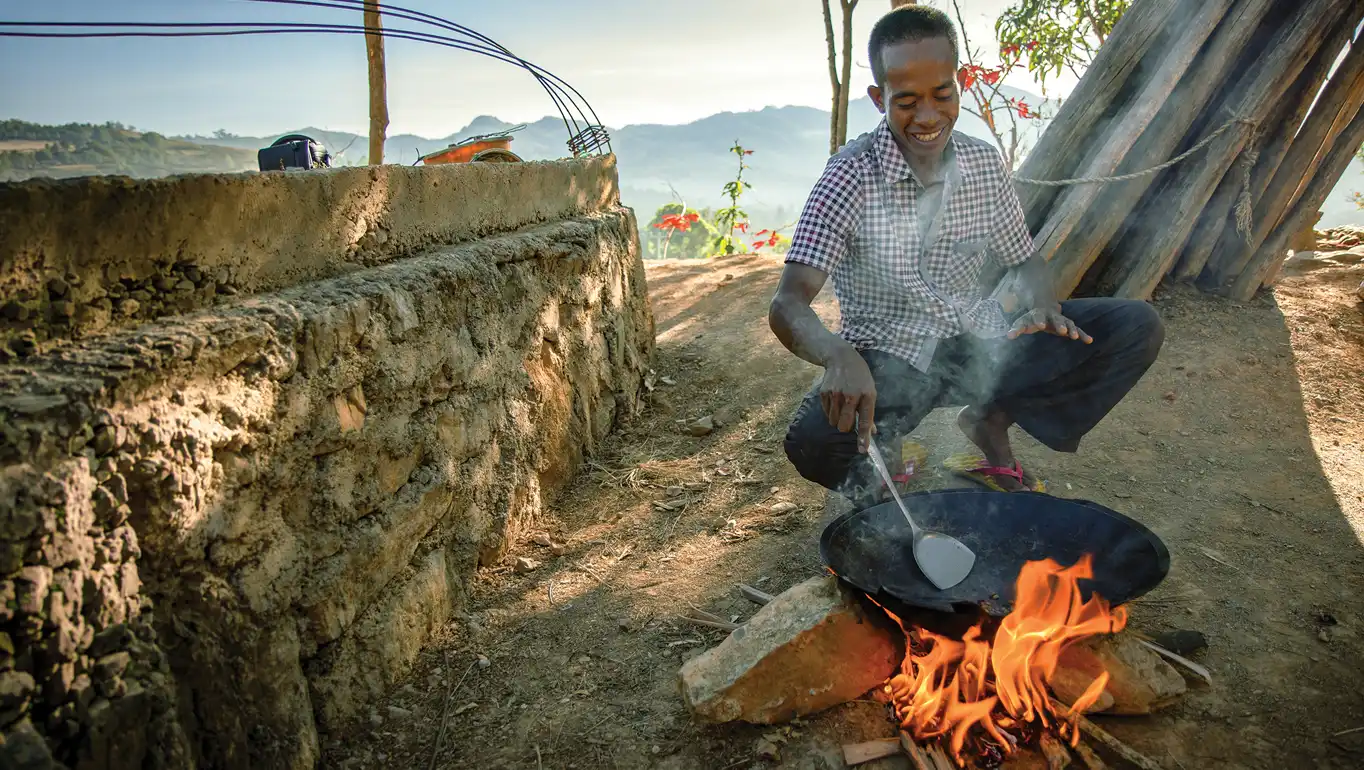
Around the world, coffee is part of the rhythm of everyday life.
In Ethiopia, preparing and sharing coffee can become an extended expression of hospitality and community. In Italy, an espresso may be enjoyed standing at a bar in just a few minutes. Across Latin America, coffee accompanies family conversations, work and hospitality.
From Nordic filter coffee to cafés in Istanbul, Paris, New York, Bogotá, or Seoul, the ways in which we prepare and drink coffee reflect history, place, and identity.
These rituals are remarkably diverse. Yet they have something fundamental in common: coffee creates a space for people to connect.
This is part of what makes coffee so interesting. Few agricultural products are simultaneously a crop, a globally traded commodity, a craft, a livelihood, a sensory experience, and an expression of culture.
Looking beyond the daily cup
Every coffee ritual begins long before coffee reaches a café, an office, or our kitchen.
Behind each cup are thousands of farmers making decisions about varieties, soil, shade, climate, and harvest; workers picking coffee cherries; communities whose economies have developed around the crop; and exporters, traders, importers, roasters, and retailers connecting producing regions with consumers around the world.
Coffee therefore provides an unusually tangible example of how an agrifood system works.
A decision made in one part of that system can influence outcomes somewhere else. Changes in consumer preferences can affect markets and production. Climate impacts at farm level can eventually affect availability, quality, and prices. Trade can create opportunities for rural economies, but how those opportunities translate into livelihoods depends on the relationships, institutions, and capacities connecting different actors.
At the Specialty Coffee Association, this system’s perspective has become increasingly important to our work.
Rather than seeing coffee simply as a commodity moving through a linear supply chain, we see a network in which people continuously create, exchange, and interpret different forms of value.
That perspective connects coffee with many of the issues facing the international community today: the transformation of agrifood systems, sustainable trade, rural livelihoods, climate resilience, decent work, knowledge, and innovation.
Understanding value differently
Coffee also challenges us to think more carefully about what we mean by value. The price paid for a cup (or for a pound) of coffee is important, but it captures only part of the picture.
Consumers may value flavor, origin, convenience, craftsmanship, identity, or the experience of sharing coffee with others. Producers need viable economic returns, but may also value resilience, autonomy, continuity of farming, opportunities for the next generation, and the health of their communities and landscapes.
Countries may value coffee as a source of exports, employment, and rural economic development. Communities may value it as part of their cultural heritage and identity. Recognizing these dimensions leads to a question that has become increasingly central to our work.
Coffee: creating many forms of value
Through the Specialty Coffee Association’s work on equitable value distribution, we have been exploring this question with actors across the coffee sector.
The objective is not simply to identify where problems occur. It is also to understand the relationships and conditions that enable people throughout the system to benefit from their participation in coffee. This distinction matters.
Ultimately, a sustainable coffee sector depends on people continuing to see value in participating in it. For producers and workers, this includes the possibility of viable livelihoods. For businesses, it includes resilient supply chains and functioning markets. For consumers, it includes access to the quality, diversity, and experiences they value.
Connecting knowledge with practice
For many years, agricultural development was frequently understood as a process in which technical knowledge was transferred to farmers and producing communities. Experience has shown us that reality is considerably more complex.
Farmers understand landscapes and production systems. Workers possess specialized knowledge about harvesting. Scientists bring research and evidence. Traders understand markets and logistics. Roasters and sensory professionals interpret physical and sensory characteristics. Consumers continuously reshape demand. Each sees a different part of the system.
Our Coffee Value Assessment is creating a more comprehensive and common language for understanding and communicating coffee’s attributes. Our work on equitable value distribution examines how value and risk move across the system. Our standards, education, and international partnerships seek to translate knowledge into practical capacity that can be applied by people and organizations working in very different contexts.
These efforts reinforce a lesson that extends well beyond coffee: innovation becomes transformative when knowledge can travel across institutions, geographies, and parts of a system; and when it can be adapted to local realities.
Trade, cooperation, and shared responsibility
Coffee offers a powerful reminder that international trade and sustainable development should not be considered separately.
Trade connects producing communities with consumers and creates important opportunities for employment, enterprise development, and economic growth. But market participation alone does not guarantee that these opportunities will be distributed equitably or translated into resilient livelihoods.
This requires new forms of dialogue across sectors that do not always speak the same language. It also requires moving beyond isolated projects toward approaches that understand how interventions interact with the broader system in which they operate.
Coffee provides a particularly useful space for this collaboration. Its global reach connects rural development, international markets, science, culture, and consumption in ways that are immediately visible.
A world in every cup
International Coffee Day gives us an opportunity to celebrate the extraordinary diversity of coffee cultures around the world. But perhaps it can also encourage us to look beyond the cup.
Every coffee we drink connects people and places that may be thousands of kilometers apart. It connects agriculture with trade, science with practice, landscapes with markets, and cultural traditions with constantly evolving consumer preferences.
Our shared responsibility is not to preserve coffee unchanged, but to help create the conditions in which this diversity can continue to flourish and in which the people and places that make it possible can continue to find meaningful value in participating in the coffee system.
Perhaps that is the most appropriate way to celebrate International Coffee Day: enjoying the ritual, while recognizing the extraordinary system of people, knowledge, trade, and landscapes contained within every cup.