


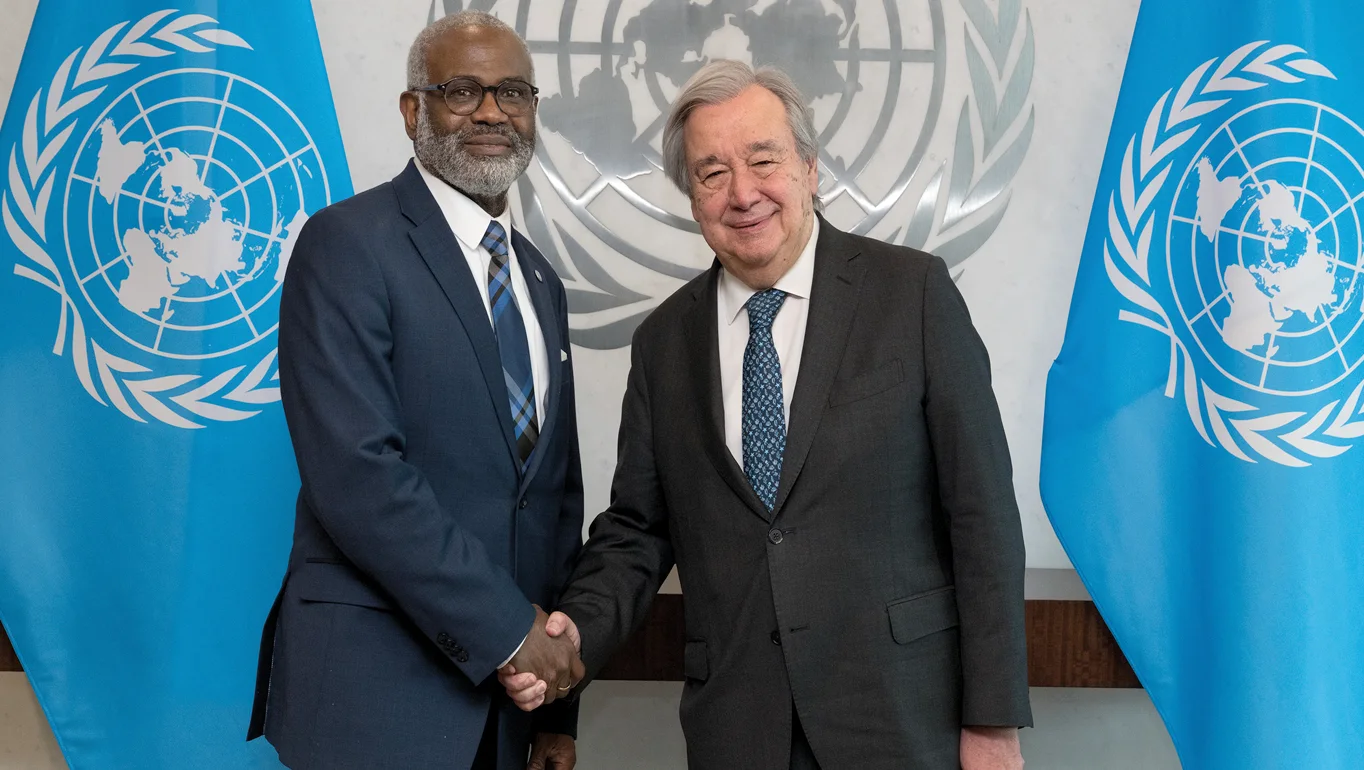
The Joint Inspection Unit’s (JIU) 60th anniversary comes at a defining moment. The United Nations is facing financial austerity, heightened scrutiny from Member States, and growing expectations that reform initiatives—such as UN80 and UN 2.0—will deliver tangible results. In this context, accountability and independent oversight are no longer peripheral or technical matters, they are central to the credibility of reform. Appointed chair of the JIU at the end of last year, Conrod Hunte brings almost four decades worth of multilateral experience to the role.
He states that the anniversary is not just a historical milestone, but both an opportunity to reaffirm the Unit’s relevance and a moment to reflect on how system-wide oversight can help the UN navigate change responsibly and effectively.
Many UN entities have internal oversight functions. What makes the JIU different?
Most organizations rightly maintain internal audit, evaluation, and investigation functions. These mechanisms play an essential role, but they are designed primarily to focus on their own organization rather than the wider UN system. The JIU has a different mandate. We are the only external independent oversight body with a system-wide perspective across the participating organizations who have accepted the JIU Statute. That allows us to examine cross-cutting issues, compare practices between organizations, identify systemic risks and inefficiencies, and highlight opportunities for coherence and shared solutions. In times of reform and constrained resources, that broader lens becomes indispensable.
Why is system-wide oversight particularly important in today’s environment of austerity?
When resources are tight, every decision carries greater weight. Member States are rightly asking what value the UN system is delivering, and at what cost. Reform cannot afford fragmentation, duplication or weak follow-through. System-wide oversight helps governing bodies see where reforms reinforce each other and where they do not. It also helps ensure that efficiency gains are real, not cosmetic. Effective and independent oversight is not an added cost, nor is it optional; rather, it is a safeguard that helps reforms deliver results and sustain trust.
You have stated that the challenge is often not a lack of reform ideas, but implementation. Can you elaborate?
The UN system is rich in ideas and commitments. The difficulty lies in execution and accountability. Oversight findings and recommendations are sometimes noted rather than acted upon, and governing bodies may endorse reforms without fully exercising their fiduciary role. That gap weakens credibility. The JIU’s work seeks to support governing bodies by providing independent, evidence-based analysis that helps them ask the right questions, track implementation, and hold organizations to account for results, not intentions.
How does your own background shape your perspective as Chair of the JIU?
I have spent many years working with multilateral institutions, including as an ambassador and in oversight-related roles. That experience has reinforced for me the importance of strong governance frameworks, clear accountability, and credible oversight. Oversight works best when it is independent, constructive and focused on improving performance. That is the spirit in which the JIU operates.
Some critics argue that the JIU is “toothless” because its recommendations are not legally binding. How do you respond to that view and are there ways to strengthen the JIU’s authority?
This perception comes up from time to time, and it is important to address it clearly. The JIU was never designed to be an enforcement body, and its effectiveness should not be measured by coercive power. Its authority lies in independence, objectivity, evidence-based analysis, and credibility with governing bodies, not in issuing binding instructions.
As the name implies, recommendations are actions put forward for consideration of legislative/governing bodies and executive heads, yet there is a strong incentive to implement them to enhance performance and accountability.
The JIU reports directly to Member States through legislative and governing bodies, which are the entities empowered to make decisions, set policies, and hold secretariats accountable. In that sense, the JIU’s recommendations derive their strength from the quality of their analysis and from the oversight role of Member States, and not from legal compulsion.
Experience shows that this model works. Over time, acceptance and implementation rates of JIU recommendations have increased, reflecting a growing recognition of their relevance and practical value.
Many recommendations have contributed to tangible improvements in governance, management practices, and coordination across the UN system.
That said, authority can always be strengthened, not by changing the nature of the JIU, but by reinforcing follow-up, dialogue and visibility, something we are currently doing with a new tracking system of recommendations and the JIU60 communication campaign. Continued engagement with governing bodies, more compelling communication on the intended impact of recommendations, clearer prioritization of recommendations, and stronger tracking of implementation all contribute to greater effectiveness and outcomes. Ultimately, the JIU’s influence grows when its work is actively used by Member States and executive leadership as a tool for learning, change, and accountability.
Looking ahead, what role should the JIU play as the UN enters its eighth decade?
The JIU must continue to evolve while remaining anchored in its unique mandate. Our role is to help governing bodies understand system-wide risks, assess whether reforms are delivering results, and identify good practices that can be scaled across organizations. As the UN pursues ambitious transformation agendas, independent system-wide oversight will be essential to ensure that change is effective, coherent and credible. That is how the JIU can continue to add value in the decades to come.