


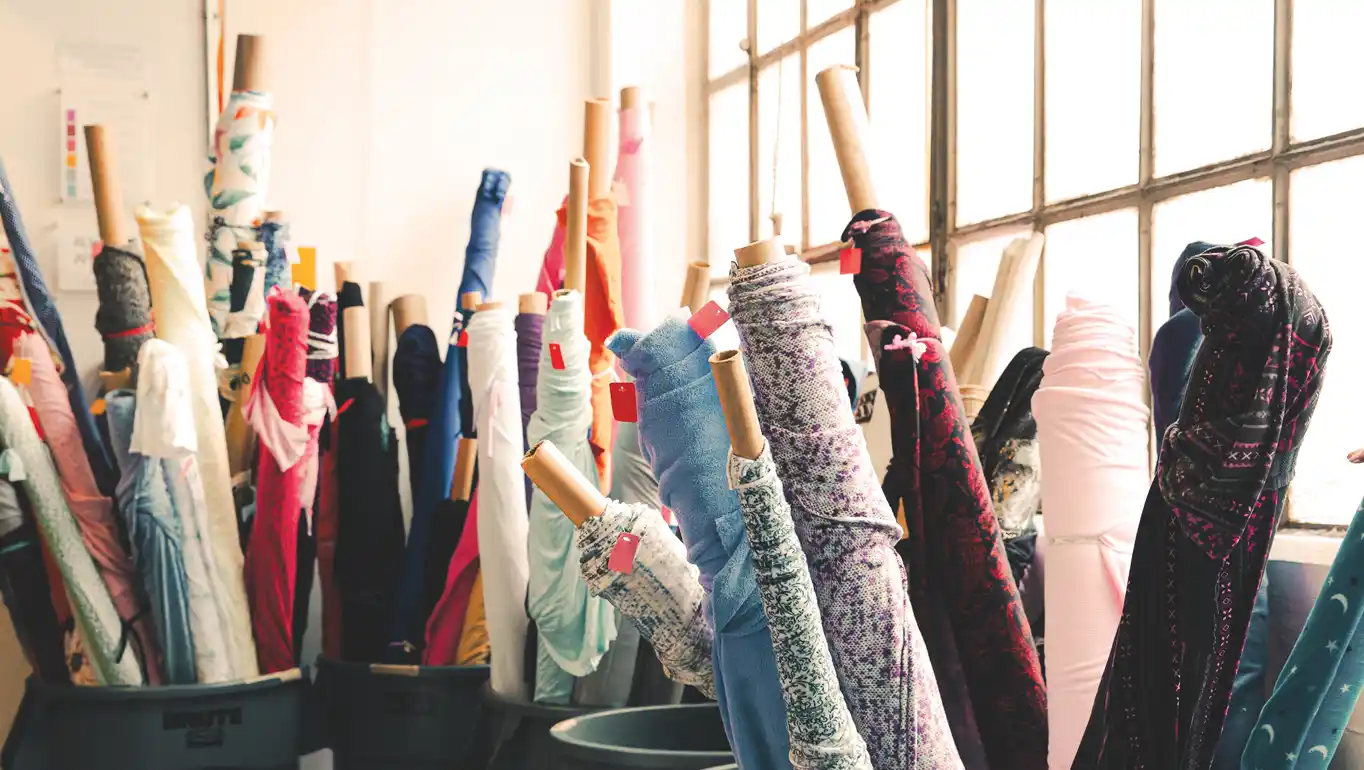
People often associate cotton with virgin crop production. Through my work at FABSCRAP, a textile recovery nonprofit serving the fashion industry, I have learned to think about cotton not only as a crop and raw material, but as a valuable textile resource to be kept out of landfills.
My work in textile recovery and research on circular systems comes from the belief that many environmental challenges stem from systems that were never designed to value resources beyond a single use. I care about finding ways to optimize those systems to improve community and environmental resilience. World Cotton Day is an opportunity to ask how we can make better use of cotton already in circulation, rather than relying on new production.
At FABSCRAP, we focus on pre-consumer textile waste: fabrics discarded in the production process. Fashion creates significant and hidden waste throughout its supply chain. During garment manufacturing, an estimated 25% of material is lost through cutting waste, defects, and inefficient pattern layouts. According to the UN, the textile industry generates 10% of global greenhouse gas emissions, more than international aviation and shipping combined. Yet despite the scale of the problem, textile recycling rates remain extremely low.
As a result, mountains of discarded textiles accumulate in informal dumps, where synthetic fibers and chemical dyes leach into soil and waterways, threatening local ecosystems and drinking water. Even when textiles enter formal disposal systems, the impacts remain significant. Textile incineration releases greenhouse gases and toxic compounds into the atmosphere, while synthetic materials deposited in landfills can persist for hundreds of years. Poorly managed landfills may allow dyes, finishes, and other chemicals to contaminate soil and groundwater.
By offering the only pre-consumer textile recycling service to the fashion industry, FABSCRAP has diverted more than 2.4 million pounds of textile waste from disposal and helped prevent an estimated 17,000 metric tons of carbon dioxide emissions. Every pound recovered represents a resource that remains in circulation rather than requiring the production of additional virgin cotton.
As both a researcher and lead for FABSCRAP’s recycling service, I connect with design teams from fashion, home goods, and other sectors. I find that most people genuinely want to reduce waste and choose sustainable materials for their designs. The challenge is that they operate within systems that prioritize speed, cost, and established protocols while technological solutions for recycling cotton lag behind.
Many textiles are composed of blended fibers, chemical finishes, adhesives, trims, and mixed-material constructions that make recycling difficult and expensive. While cotton-to-cotton recycling technologies are advancing, they often require the textile to be 100% cotton. However, cotton is often blended with other fibers, limiting the ability to recover the cotton fibers for future cotton products.
As a result, mechanical recycling remains the dominant pathway for many recovered textiles. Materials are shredded into fibers and downcycled into products such as insulation, automotive padding, and mattress filling. While these solutions keep materials out of landfill, they do not yet create a fully circular textile system.
For me, the lesson of World Cotton Day is that we must prevent cotton from becoming waste in the first place, and collaborate to extend the fiber’s useful life. The responsibility to develop solutions is something that everyone should be empowered to act on, not just brands.
That is the role FABSCRAP seeks to play. Beyond offering immediate recovery solutions for excess textiles, FABSCRAP is building a diverse community of changemakers. Through our education, workshops, volunteer programs, and redistribution efforts, we invite the public to participate directly in our mission to keep fabric out of landfill – making textile waste visible and actionable. Reusable materials are made available to students, artists, designers, and community organizations, while non-reusable materials are recycled. We also work with brands to educate design teams: identifying material considerations and recovery opportunities to inform sourcing and design decisions.
In September, FABSCRAP celebrated its tenth anniversary. Over the past decade, we mobilized 15,000 volunteers and worked with over 950 brands.
Through this collaborative effort, 546,922 pounds of fabric were given a second life as an accessible upcycling resource for diverse communities.
For FABSCRAP’s next decade, we’re exploring creative, circular ways to transform textile waste – including cotton – into new products. We collaborated with Wastewear, and the first of these made-from-waste products are already available at shopfabscrap.org.
Building systems that recover value from cotton before it becomes waste requires continued investment in community engagement, circular design practices, and material recovery infrastructure.
It also requires collaboration between designers, manufacturers, recyclers, policymakers, and consumers to ensure that textiles are designed with recovery in mind.
World Cotton Day reminds us that sustainability is not only about producing better raw materials; it is also about using what we already have. Though significant technological and systemic challenges remain, FABSCRAP will continue to invite others to join and do their part to expand textile recovery. Whether you bring textile recycling to your brand, volunteer to sort textiles, or extend the life of a fabric through a unique creation, we hope you will play your part and join our mission.