


Every October, cities take center stage at the United Nations thanks to UN-Habitat’s month-long global campaign. Urban October brings together governments, local authorities, communities, academia, the private sector and international organizations to showcase solutions, exchange knowledge and accelerate action for more sustainable cities.
The campaign begins on the first Monday of October with World Habitat Day and concludes on 31 October with World Cities Day. Throughout the month, partners around the world organize conferences, community events, exhibitions, policy dialogues, clean-up campaigns and educational activities that encourage people to reflect on one of the defining questions of our time, how do we build cities that leave no one behind?
This year’s Urban October comes at a time when the global housing crisis has become one of the world’s greatest development challenges. According to the 2026 World Cities Report, presented by UN-Habitat in May 2026, up to 3.4 billion people experience some form of housing inadequacy, including more than 1.1 billion who live in informal settlements and slums, often facing the risk of eviction and lacking access to basic services. Rising housing costs, climate change, conflict and rapid urbanization continue to place adequate housing beyond the reach of millions, deepening inequality and limiting opportunities for people and communities around the world.
Housing, however, is about far more than shelter. It is the foundation for health, education, security, dignity and economic opportunity. It shapes whether children can learn, whether families can withstand climate shocks and whether communities can thrive. Without adequate housing, progress across the Sustainable Development Goals becomes significantly more difficult. This message was reinforced during the 2026 global review of Sustainable Development Goal 11 at the High-level Political Forum and the midterm review of the New Urban Agenda at the United Nations General Assembly, where Member States reaffirmed the central role of adequate housing in achieving sustainable development.
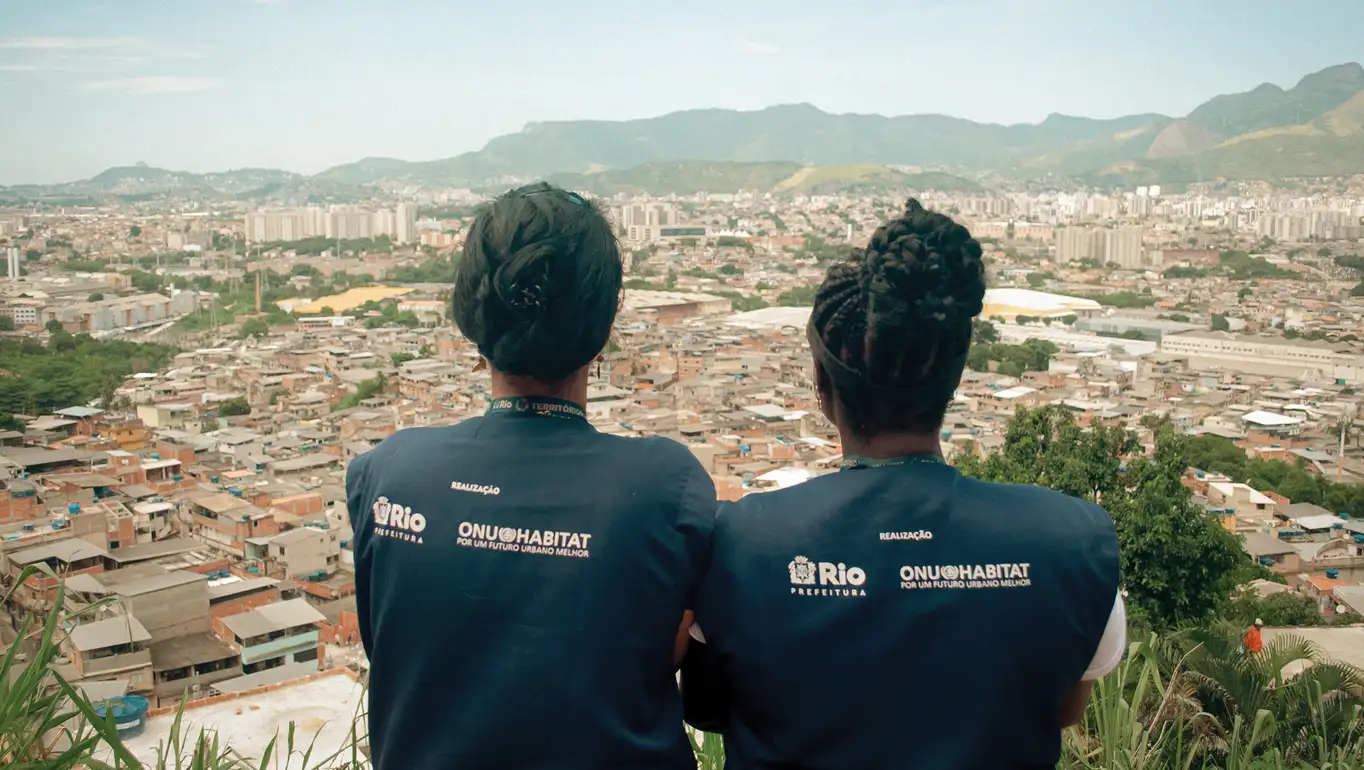
This year, Urban October places adequate housing at the center of the global conversation with a special focus on the transformation of informal settlements and slums. These communities should be viewed as neighborhoods with enormous human potential. Upgrading housing, infrastructure, expanding access to basic services and strengthening security of tenure can improve lives and make entire cities healthier, safer and more resilient.
World Habitat Day, hosted by the Sultanate of Oman on 5 October under the theme “Adequate Housing for All,” will focus on accelerating action to expand access to adequate housing through stronger policies, sustainable financing, better data and partnerships that reach vulnerable and marginalized communities.
Later in the month, World Cities Day, hosted by the People’s Republic of China in Fuzhou on 31 October, will focus on “Regenerating the City: Adequate Housing for All.” The celebration will demonstrate how urban regeneration can revitalize neighborhoods, improve housing and public spaces, strengthen climate resilience and create more connected and people-centered communities.
Together, the two global observances provide a platform for governments, cities and partners to exchange practical solutions, strengthen collaboration and accelerate implementation of the New Urban Agenda and Sustainable Development Goal 11.
Urban October has become a truly global movement. In 2025 alone, 579 events were organized across 242 cities in 58 countries, while campaign activities reached more than 38 million people through social media. Every dialogue, exhibition, youth event and community initiative demonstrates that local action can contribute to global progress.
The future of humanity is increasingly urban. Building sustainable cities begins with investing in people, their homes and their neighborhoods. Urban October contributes to transforming dialogue into action and reminds us that creating inclusive, resilient and sustainable cities is a shared responsibility.