


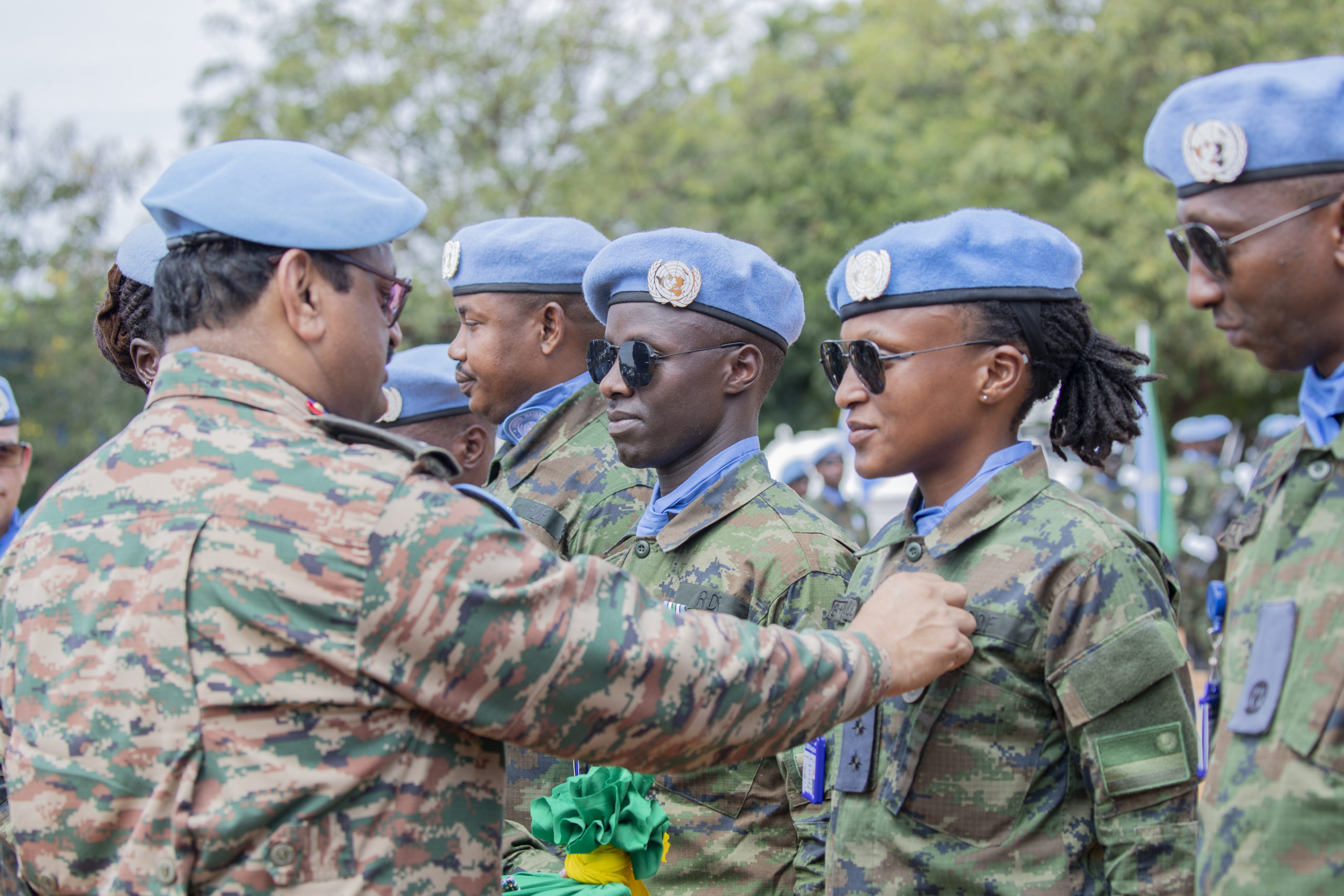
No matter who you are or where you serve, we all have a role to play in preventing and responding to sexual exploitation and abuse by UN personnel. We spoke with Lt Gen Mohan Subramanian, Director of the UN’s Office for Peacekeeping Strategic Partnership and former UNMISS Force Commander, about his work to place protection at the heart of peacekeeping.
In March, you concluded your tenure as Force Commander of the United Nations Mission in South Sudan (UNMISS). What were the major challenges to protecting communities from sexual exploitation and abuse (SEA), and how did you overcome them?
One of the main challenges in addressing SEA in South Sudan was that many people lived with extreme insecurity, poverty, and deprivation. Exploitation was sometimes perceived as a lesser, or inevitable, threat when compared to hunger, killings, displacement, or intercommunal violence. It risked becoming normalized as a survival mechanism, and this contributed to significant underreporting. The absence of allegations could therefore never be interpreted as the absence of abuse.
Another challenge was the intense operational pressure on peacekeepers, whose focus was often directed toward immediate physical protection tasks. To address this, we strengthened community engagement, leadership accountability, and preventive approaches to foster a culture of vigilance in daily operations. We emphasized that protection from sexual exploitation and abuse (PSEA) was integral to the mission’s mandate to protect civilians: protectors cannot become predators.
When it comes to protection from sexual exploitation and abuse (PSEA), what was your proudest achievement as Force Commander of UNMISS?
One of my proudest achievements was driving a mindset shift within the UN Peacekeeping Force leadership on SEA. I consistently stressed that personnel deployed to protect vulnerable populations could never become a source of further suffering for the communities they served. Protection and predatory behavior are fundamentally incompatible.
We made clear that failure to report suspected SEA constituted a serious leadership failure. Prevention and
risk mitigation were integrated into leadership performance assessments to ensure commanders treated PSEA as a core duty. We also strengthened prevention by holding annual PSEA audits of all bases; appointing dedicated focal points at Force Headquarters and in the sectors; and including a member of the Force gender team in my front office. These measures helped us to identify risks early and support responsive leadership and preventive action.
You’ve now assumed new duties as head of the UN’s Office for Peacekeeping Strategic Partnership (OPSP). What does OPSP do and why is protection from sexual exploitation and abuse an important priority for the office?
OPSP identifies and reports gaps affecting mandate implementation in peacekeeping missions, while strengthening performance, accountability, and the safety and welfare of uniformed personnel. Our role is to ensure that performance is continuously monitored, challenged, and improved. As a bridge between Headquarters, field missions, and troop- and police-contributing countries, we help to ensure that performance issues are addressed transparently, especially in an increasingly complex and scrutinized peacekeeping environment.
PSEA is fundamental to the credibility and legitimacy of peacekeeping. In addition to the harm caused to victims, SEA erodes community trust, weakens cooperation with local authorities, and undermines mission effectiveness. OPSP therefore treats SEA not only as a conduct issue, but as a leadership, accountability, and system performance issue. It assesses command structures, preventive and early warning mechanisms, and corrective actions to safeguard both people and the integrity of peacekeeping operations.
If you had one “ask” – one thing that would most strengthen our efforts to address SEA in peace operations – what would it be?
It would be for every Force Commander and other mission leader to personally involve themselves in SEA risk management. This should include risk assessment visits to bases throughout the country with the mission’s Conduct and Discipline Team. Too often, systems only react once allegations emerge. In my view, prevention requires the same rigor and discipline that missions apply to security threats or operational readiness.
Accountability is equally important. Commanders at all levels should be held responsible not only for responding to incidents, but also for failing to proactively identify and mitigate risks. Leadership accountability is essential because the tone of conduct in a mission is set by commanders. When prevention is part of command responsibility, the entire mission becomes stronger and more credible.
What message would you like to share with fellow leaders?
PSEA must be treated as an integral part of civilian protection, not as a separate administrative issue. Peacekeepers are deployed to protect vulnerable populations, and our presence must never become a source of harm. Commanders must prioritize prevention, accountability, and dignity as visibly as operational readiness or force protection.
Sexual harassment among peacekeepers also requires much greater attention. Formal mechanisms are often too slow and poorly adapted to peacekeeping contexts. During my tenure in UNMISS, we established a confidential system to provide victims with a trusted reporting channel and enable interim protective measures. Over two years, 25 cases were reported, representing roughly 10% of female individual uniformed personnel in the force. For me, this reflected not increased misconduct, but increased trust in the system.
USEFUL RESOURCES
How to report sexual exploitation and abuse:
Learn more about the UN response: