


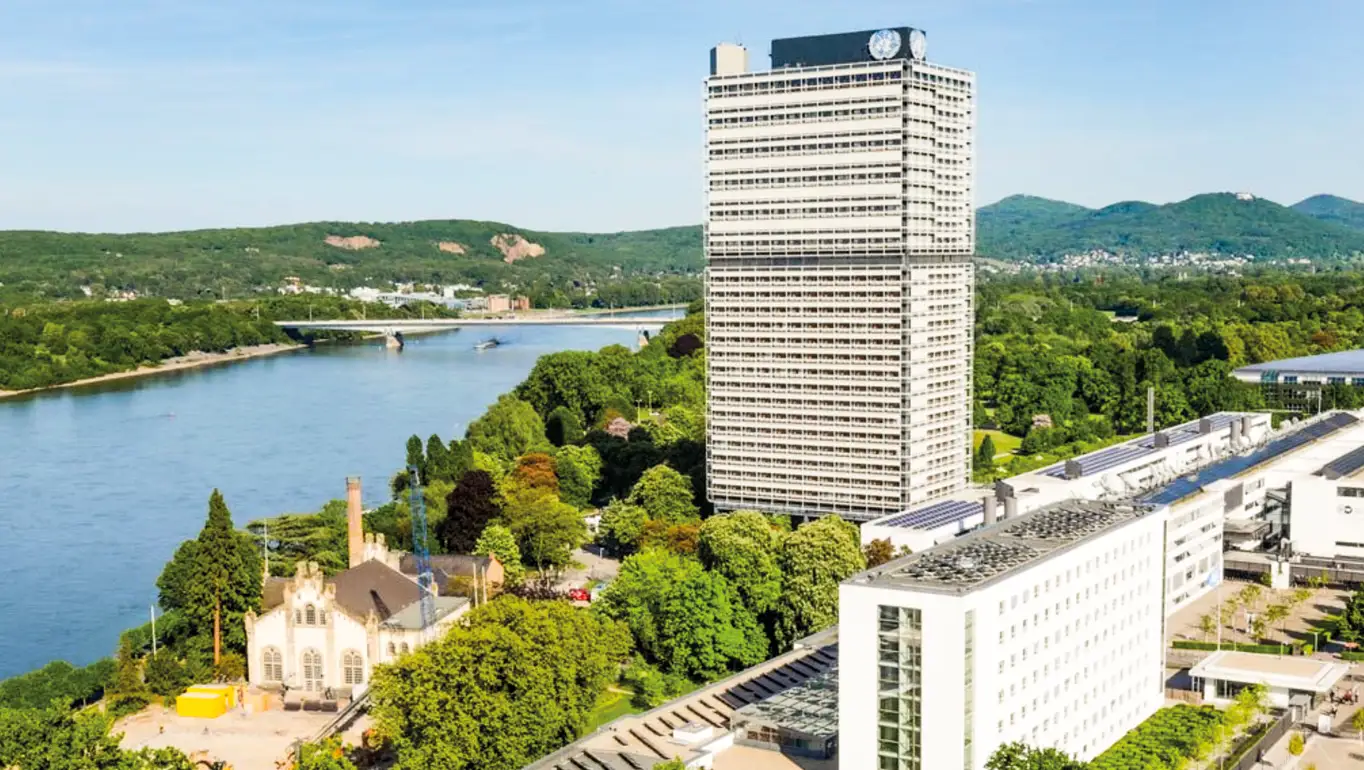
The UN80 initiative has wrought many changes for UN System staff in the last year including relocation from large Headquarters duty stations to less expensive ones such as Nairobi, Valencia, and Bonn.
This month we take you to Bonn, a small city in Western Germany, which will receive hundreds of staff and their families in 2026 and 2027. What is life like there? Bucolic and welcoming? Or staid and humdrum? As one of many relocating staff with these questions on my mind, I spoke with Jelena Hadzic, a Programme Officer based in Bonn with the United Nations Framework on the Climate Change Convention to learn about her new city.
What were your first thoughts when you heard that so many UN staff will be moving to Bonn?
My first thought was: where on earth are we going to fit them all! In terms of office space and housing. And my second thought was: how wonderful.
They will make Bonn and our campus livelier, more dynamic and more international.
Some say that Bonn is more like a large town than a city.
Capital cities have a vibrancy to them and I’m a capital city girl from Belgrade. And interestingly, Bonn was the capital of Germany until the fall of the Berlin Wall, yet it doesn’t feel like it. It is very quiet, maybe too calm for my liking.
On a Sunday you don’t have many options, even in the city center. There are a few plazas and a lot of gelaterias and it’s delightful this time of year. But if the weather isn’t perfect with lots of people buzzing around, then it doesn’t feel so vibrant. Other colleagues really love it and enjoy it.
Maps of Bonn have a lot of green space. Does it have a suburban feel?
That is one thing I like: there are a lot of parks. And across the river from the UN campus in the Beuel neighborhood you have pebbly beaches. You can also swim in the Rhine! Last August the weather was perfect: very hot. There are a few spots where you have privacy, and some locals go there with kids.
Also, while it’s good to have a car in Bonn, I would absolutely recommend that everyone get a bicycle. You can buy them from colleagues who post on bulletin boards at the office. You don’t have to spend much money to get a bike and live life to the fullest in Bonn.
I can’t wait to ride bikes with my son along the Rhine. Is it as magical as it sounds?
Yes. The Rhine has a particular shade of blue, especially in the morning, and it’s just stunning. If you want to go for a nice stroll during your lunch break, the Rhine is right there. On the weekends you can cycle or walk on both sides of the bank. You can take the sunny side in the morning, then hop on a ferry and have the afternoon sun on the other side.
The Germans have a really good cycling culture. They are very serious about their very fast and fancy bicycles that cost a couple of thousand euros. You see people with all their gear, like they are ready for competitions on TV.
I don’t cycle, but I have my rollerblades. It can be magical because you can cycle or roller blade close to the river but take bike paths that branch out into massive green areas that go for kilometers and kilometers. Suddenly a beautiful old house or mansion will appear with its own land and little water source that merges into the Rhine. It’s incredible.
Tell me about the UN office space.
Most UN staff in Bonn work in the tallest building on campus, the “Langer Eugen” which used to house German federal government staff. The newest building is for UNFCCC colleagues. Others work in the third, smaller building on the campus. I haven’t been privileged to discussions with the host state, but I’m sure there will be plenty of office space made available.
Is there a strong sense of a UN community?
Sadly, in my view there isn’t. I’m very hopeful that with the influx of colleagues from New York, that will develop. Our staff associations hold some parties and the Carnival season is very big in Germany. Each year some colleagues – especially the ones who’ve been living here a long time – dress up and have a wonderful time. You can rent costumes and join in if you want.
Is there a cafeteria where UN staff from different entities eat together?
There is only a small café on campus. It has breakfast, brunch and most surprisingly, vegetarian dishes. And there are many great food options just outside the campus. Every day of the work week there are at least three different food trucks. Further down the same main street there are several restaurants.
I’m just starting to learn German. Will I be able to navigate daily life in English?
That has not been my experience. In Cologne and Dūsseldorf, it’s a different story. Bonn is a university town so there are many students here who speak English well. Some work as servers in cafes and restaurants, but they are the exception. Colleagues should learn the basics in German before moving here.
The “Ruhetag” custom means that Sundays in Germany are very quiet and many shops are closed. How do you spend Sundays?
I leave town. I need my freedom so I drive to marvelous Maastricht. It’s a few hours away, just across the border in the Netherlands. It’s beautiful and lively and I would recommend that everyone go there. Cologne and Dūsseldorf too. But during the spring and summer, my favorite thing to do is visit the antiques fair.
It takes place on the weekends – including Sundays – in towns just outside Bonn like Bad Honeff, Koblenz and Siegburg, reachable by train in just 30-40 minutes.
I know that you’ll be moving on from Bonn at some point. What will you miss about Bonn?
In the past I wasn’t the type to form friendships at work. Something changed when I came to Bonn. I was open to seeing colleagues in new ways. I’ve been surrounded by such kind, smart individuals. I almost don’t have words to describe the friendships I’ve made. I also have a little community in my favorite café where I spend a lot of time. My heart is full, and when I do leave, maybe for work somewhere in the Middle East region, restructuring war-torn areas, I’ll always remember them.