


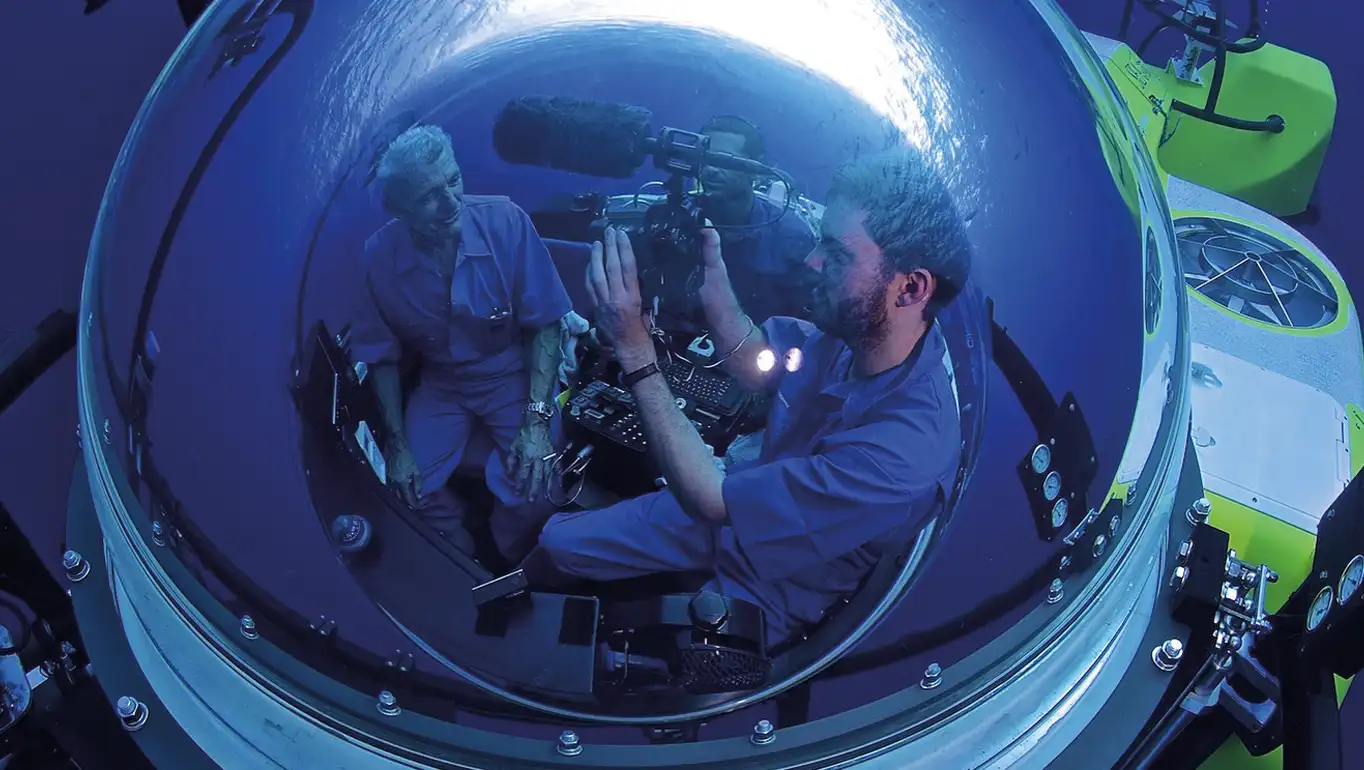
It is impossible not to be drawn to the magnetic energy of a modern-day hero. Speaking with Paul is a journey in itself: a conversation with an adventurer who has never lost the hope—or the determination—to speak about nature and the actions we can all take to improve our planet.
Former Vice President of the Royal Geographical Society and Chair of its Expeditions and Fieldwork Division, Paul Rose is now Expedition Leader for the National Geographic Pristine Seas expeditions, bringing scientists and explorers to some of the ocean’s most remote regions to help establish new marine protected areas. He previously served for ten years as Base Commander of Rothera Research Station in Antarctica for the British Antarctic Survey, earning Her Majesty The Queen’s Polar Medal. For his work with NASA on the Mars Lander project on Mount Erebus, Antarctica, he was also awarded the United States Polar Medal.
You have spent decades exploring some of the most remote regions on Earth. From your perspective, what are the most urgent environmental changes you have personally witnessed, and what should the international community prioritize to address them?
One of the most worrying things I have witnessed in recent years is that people are beginning to lose trust in scientific data—and I believe this is extremely dangerous. If we look at plastic pollution, overfishing, overextraction of natural resources, and the loss of habitats and biodiversity, these are issues whose numbers we see constantly in the news. Yet those figures often disappear quickly from people’s minds, partly because some assume they are simply the product of artificial intelligence or algorithms rather than the result of real scientific work.
Behind every dataset is real field research: scientists and teams diving into freezing water, crossing deserts, sailing through storms and working for months in remote polar stations to gather evidence. Scientific knowledge comes not only from machines, but from people working in some of the world’s toughest environments.
There is also reason for hope.
More people are involved in research today than ever before, and science needs many professions, from scientists to divers, doctors, engineers, pilots, electricians and drivers who make expeditions possible.
The more people who become involved in science, the more powerful this connection becomes. When they return home from an expedition or a field mission, they do not just bring back data—they bring back stories and experience. They become ambassadors for science and for the planet. And when those same people later sit in a meeting room, make business decisions or stand in front of a board, they carry with them a deeper sense of responsibility.
That is how real change happens: when knowledge from the field reaches the places where decisions are made, and when more people feel personally connected to the future of our planet.
How important is storytelling in translating complex scientific findings into action by governments, institutions and the public?
Storytelling is fundamental today.
The secret weapon lies in sharing stories that inspire a spirit of adventure in others. This entails encouraging people to push their limits and embrace exploration as a mindset, just as we naturally do when we are children. Teachers, parents and society at large should nurture this curiosity. Even policymakers and ambassadors, when possible, should experience firsthand what melting ice in Antarctica or deforestation in the Amazon really looks like. Seeing these realities on the ground makes it far easier to understand a field report—and allows them to become witnesses and storytellers of nature themselves.
Bringing scientific data, films and images to the public is essential, but the power of thoughtful storytelling should never be underestimated. Great leaders who have experienced something personally often carry a particular sparkle in their eyes, a sense of conviction that comes from direct experience. That authenticity resonates deeply with us as voters, consumers and decision-makers.
In the end, storytelling bridges the gap between science and society. It transforms complex research into narratives that people can understand, remember and act upon, helping to build a shared sense of responsibility for the future of our planet.
What role do international organizations and multilateral cooperation (such as the UN) play in turning scientific discoveries into concrete conservation policies?
During challenging field projects (such as in the harsh conditions of the polar regions) we remind teams that every observation, data point and report helps shape better global decisions. Work done in remote places ultimately feeds the knowledge policymakers rely on, but it only matters if leaders are willing to listen and act.
I saw this clearly during Ocean Week in Brussels, where I facilitated discussions among politicians, scientists and project leaders. Despite their different backgrounds, they shared an explorer’s mindset: curiosity, adventure and deep respect for the ocean. That spirit helps connect science with real-world action.
International organizations play a crucial role in this process. Despite limited funding and political challenges, they bring countries, scientists and decision-makers together.
Geneva, in particular, embodies this cooperation, a place where global dialogue, continuity and careful listening shape international action.
We should never underestimate this power. Institutions that unite the world around science and shared responsibility are essential to turning knowledge into action. My role is to bring people closer to the frontline, helping them understand the realities scientists face in the field and encouraging that same spirit of exploration and responsibility for our planet.