


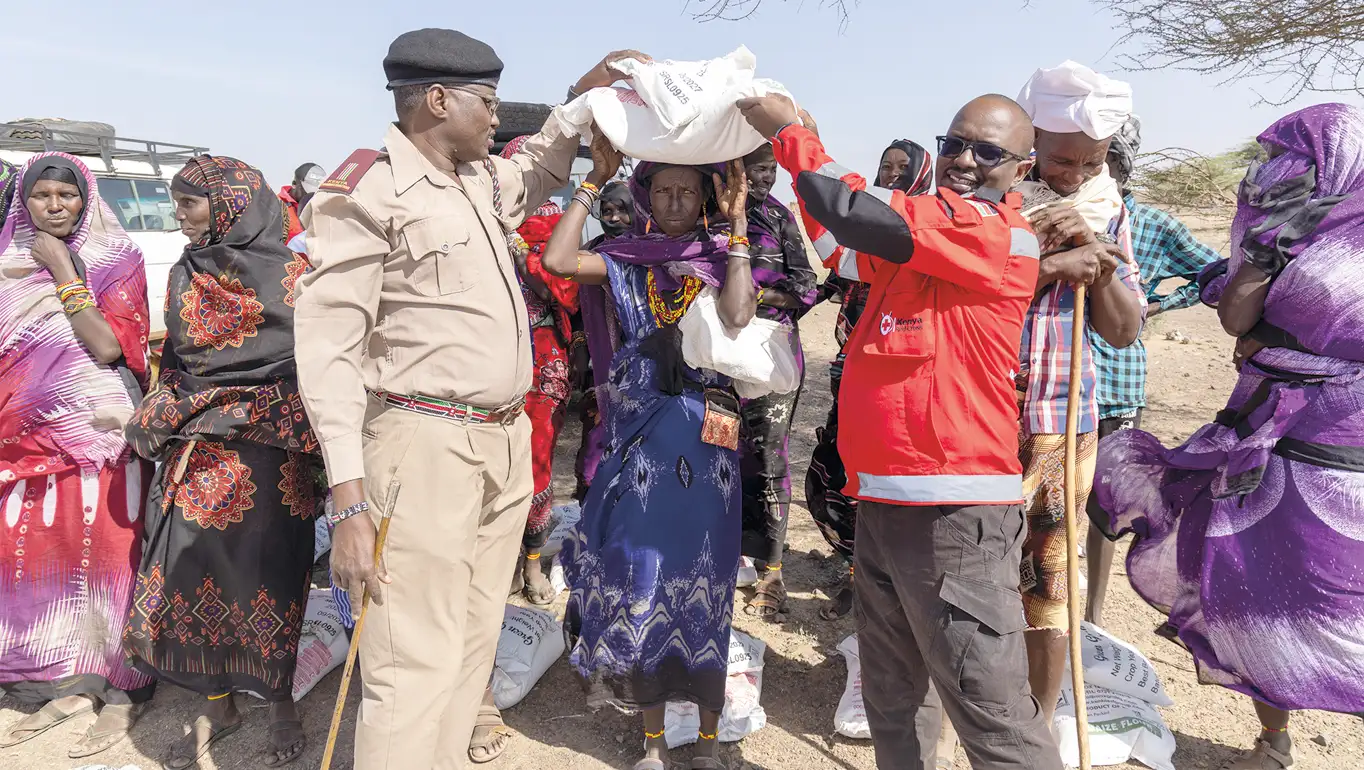
During a crisis, often the first face people see is not an international delegate or a convoy of trucks. It is a neighbour in a red vest.
Across 191 National Red Cross and Red Crescent Societies, more than 17 million volunteers form the backbone of the Red Cross and Red Crescent network – the world’s largest humanitarian network, coordinated globally by the International Federation of Red Cross and Red Crescent Societies (IFRC) Secretariat. As the world marks International Volunteer Year 2026, the IFRC is celebrating these volunteers under one simple banner: “Local, Everywhere.”
The phrase captures what sets the Red Cross and Red Crescent apart. While the IFRC connects and supports National Societies globally, it is those National Societies, rooted in their own communities, that mobilize volunteers. They are not outsiders arriving after a crisis. They are teachers, parents, students and community leaders who step forward when their communities need them most.
From classrooms to crisis response
In Mandalay, Honey Thin – affectionately known as “Teacher Honey” – is, outside school hours, a volunteer with the Myanmar Red Cross Society. So when devastating floods, followed by a powerful earthquake struck her community in 2025, she didn’t hesitate. Swapping her classroom role for a humanitarian one, she distributed essential supplies and helped families navigate the aftermath of disaster.
Her story reflects a defining feature of the IFRC network: volunteers are embedded in everyday life. They are present before disaster strikes and remain long after headlines fade.
In Egypt, volunteers from the Egyptian Red Crescent have been supporting families evacuated from Gaza. In one shelter, a volunteer sits with children during a drawing activity, a simple act that offers comfort and stability amid unimaginable trauma. In northern Nigeria, Pwavi Sanagon Kushi, a father and community leader, helps run a “Papas’ Club,” bringing fathers together to address chronic malnutrition affecting their children.
In the mountainous regions of Afghanistan, a young Red Crescent volunteer named Sharifa provides essential health care to remote communities cut off by earthquake damage.
These stories span continents and contexts, but they share a common thread: volunteers are trusted and deeply connected to the people they serve. They are local, everywhere.
Why the volunteer model matters
Humanitarian needs are rising at an unprecedented pace, driven by climate shocks, conflict, displacement and health emergencies. At the same time, mistrust and polarization are growing in many societies.
The Red Cross and Red Crescent volunteer model offers a powerful response to both challenges.
First, it enables speed and scale. When a typhoon struck parts of the Philippines just months after a catastrophic earthquake, local volunteers were already on the ground, organizing evacuations, distributing relief and supporting recovery. Their proximity allows for immediate action, often within hours.
Second, it builds trust. Volunteers are not perceived as external actors; they are neighbors. They speak the language, understand cultural norms and know which households may be most vulnerable. This local presence strengthens acceptance, reduces barriers to assistance and fosters social cohesion.
Third, it shifts the narrative from aid delivery to community resilience. Volunteers do not only respond to emergencies. They train communities in first aid, promote vaccination campaigns, conduct early warning outreach, support climate adaptation initiatives and counter misinformation. Their work helps prevent hazards from becoming crises and crises from becoming catastrophes.
Standing in solidarity with volunteers
But, in the midst of celebrating volunteers, it’s also vital to call out how they are being threatened.
This year, across the IFRC network, National Societies are amplifying volunteer voices to ensure they get the recognition they deserve. But recognition alone is not enough. Volunteers today are facing escalating violence. 2024 was the deadliest year on record for humanitarian workers globally. Across 2024 and 2025, 59 volunteers and staff from the IFRC network were killed while serving their communities, most as a result of violence. Local humanitarians, the very people who are first to respond and often the last to leave, bore the overwhelming brunt of these attacks.
Through the IFRC’s global #ProtectHumanity campaign, the network is sending a clear message: those who save lives are not targets. Attacks on volunteers are not inevitable tragedies, they are preventable violations under international humanitarian law. When a volunteer is killed, it is not only a life lost; it is a lifeline cut for an entire community. Without safe and unhindered access, humanitarian action cannot reach those who need it most.
Protecting volunteers requires more than words. States and parties have a responsibility to ensure the safety of humanitarian personnel and to respect the emblems that protect them. The IFRC is urging donors and partners to invest in the safety and well-being of local volunteers, including training, insurance, protective equipment and psychosocial support, as a fundamental responsibility, not an optional add-on.
If we truly value the contributions volunteers make, we must ensure they have the safety, support and respect needed to carry out their work, and return home to their families, safely and sustainably.
Local action, global impact
For more than 115 years, voluntary service has been at the heart of the Red Cross and Red Crescent. The IFRC connects this vast network, enabling knowledge-sharing, surge support and coordinated action across borders. But the heartbeat of the network remains local.
In every evacuation before a storm, every vaccination campaign, every psychosocial support session with a displaced child, there is a volunteer choosing to act.
As the world marks International Volunteer Year 2026, the message is clear: protecting volunteers means protecting humanity. Their red vests symbolize more than assistance, they represent trust, solidarity and the belief that communities are strongest when they care for one another.
In a world facing overlapping crises, the most powerful humanitarian resource is not equipment or funding.
It is people – local, everywhere.