


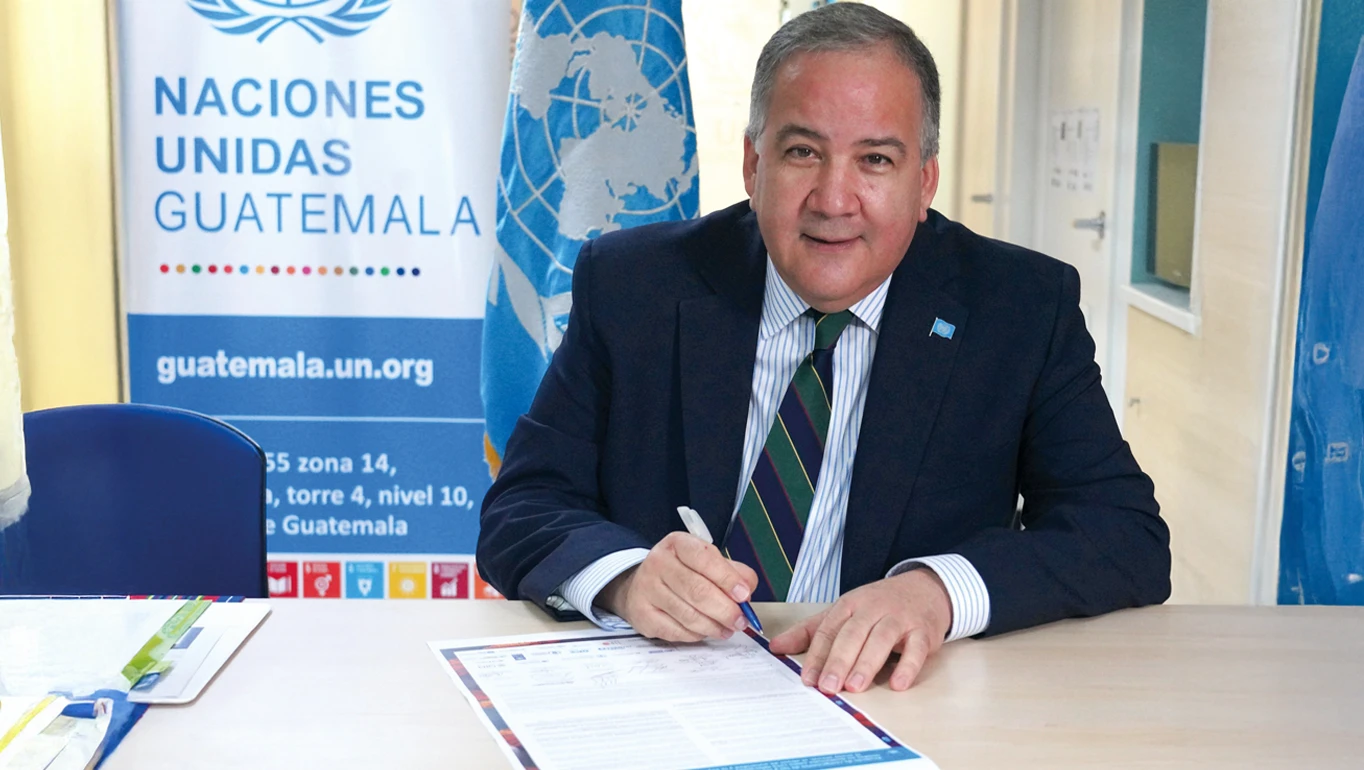
No matter who you are or where you serve, everyone has a role to play in preventing and responding to sexual exploitation and abuse (SEA). In this series by the Office of the Special Coordinator on Improving the UN Response to Sexual Exploitation and Abuse (OSCSEA), we highlight individuals who are upholding the UN’s core values by protecting staff and communities from harm. Here, we hear from Miguel Barreto, United Nations Resident Coordinator in Guatemala.
What does a typical day in your role look like?
As Resident Coordinator, no two days are the same. Much of my work involves bringing agencies together to ensure coherence, coordination, and alignment with the needs of the people we serve. My days range from meeting government counterparts and civil society, to visiting communities, or supporting UN personnel on programmatic and operational issues. One constant is ensuring that the UN’s values – especially our duty to protect communities from harm – guide every decision. I also set aside time each week to listen to my team, the Resident Coordinator’s Office (RCO), whose work keeps our support close and accessible to agencies and counterparts. Listening remains one of the most important parts of leadership.
What are the major challenges to preventing and responding to sexual exploitation and abuse, and how do you overcome them?
On the prevention side, a central challenge is building trust – within communities and among our personnel. People must know that the UN takes SEA seriously, that we will respond appropriately, and that reporting mechanisms are safe and accessible. Every staff member must understand their responsibilities and feel equipped to act. A lack of reports does not mean SEA is absent; strong risk analysis is vital for prevention, helping us to identify situations that could lead to misconduct and to address vulnerabilities before harm occurs.
For response, it is critical that everyone — UN personnel, partners, and communities — knows how to report SEA and what mechanisms exist.
We have conducted sustained advocacy and established clear procedures that guide us when cases are reported. We also set up an inter-agency hotline and an inter-institutional email channel so community members can report concerns or seek advice. These collective systems help us respond as one UN.
What are the values that guide your PSEA strategy and its implementation and how have you adapted the strategy to your local context?
Our work is grounded in inclusion and accessibility. In Guatemala’s diverse cultural and linguistic landscape, it is essential that our interventions reflect and respect that diversity. This year, agencies worked closely with communities to develop materials that speak to their realities, including those of Indigenous peoples and children.
We apply a victim-centered approach. The UN in Guatemala has a Victims’ Rights Focal Point, which strengthens our ability to place victims at the center of everything we do – and, in particular, our response – by ensuring assistance is timely, confidential, and respectful.
How do you and your inter-agency network engage with personnel, partners, and communities on this issue?
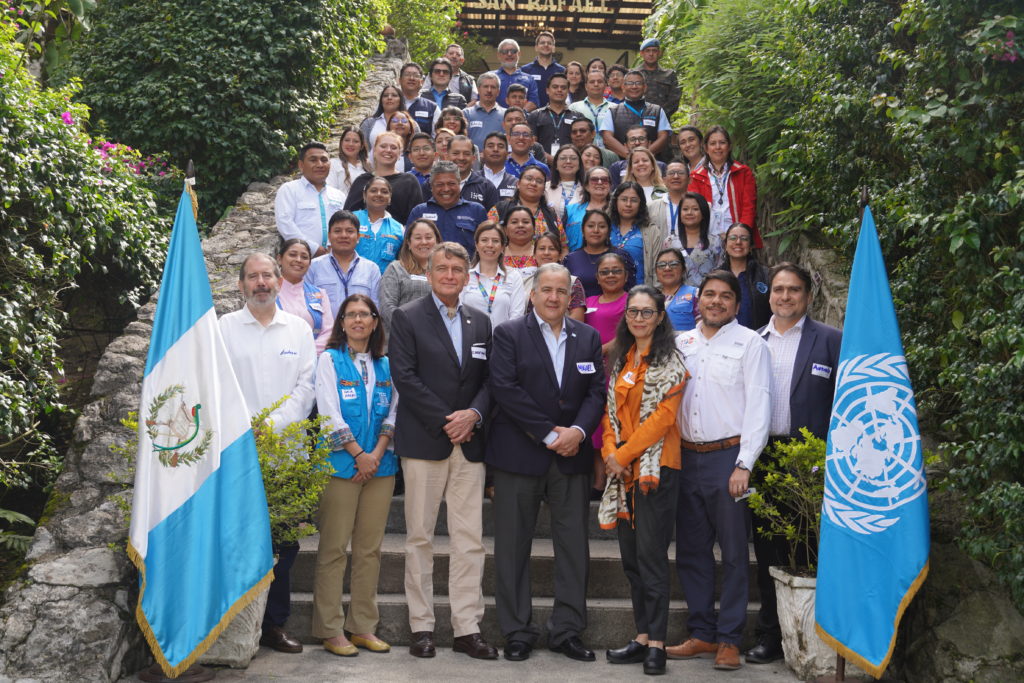
With personnel, we have invested heavily in strengthening field-level capacities. For two consecutive years, we trained staff in regions where the UN has a strong presence; last year’s workshop also included humanitarian partners. I encourage UN representatives to participate; this year’s workshop also included humanitarian partners.
Our PSEA network includes three field-based organizations that extend our reach. With RCO support, a consultant conducted a risk analysis focused on community perspectives, providing insights into local vulnerabilities.
Guatemala is also among six countries supported by the Trust Fund in Support of Victims of SEA. Through this joint program, we strengthened collaboration with women leaders – building their skills and capacity to act as community-based complaint focal points. Women-led networks now play a key role in raising awareness, supporting victims, and facilitating referrals.
At the leadership level, I championed the Acuerdo de Compromiso for zero tolerance toward discrimination, harassment, abuse of authority, and SEA. Signed by all 18 UN agencies – with the participation of Under-Secretary-General Christian Saunders – this agreement elevates PSEA as a UNCT priority and reaffirms our collective responsibility to uphold a unified, principled approach.
What message would you like to share with fellow leaders?
Prevention begins with us – through our behavior, decisions, and leadership. Addressing SEA is not only about policies or statements; we have to model the values we expect from others, challenge behaviors that contradict our norms, and foster a culture where dignity and respect are non-negotiable. We must also ensure our teams feel safe, supported, and aligned with the highest UN standards to break the silence around SEA. Sustained conversations at all levels about behaviors that can lead to misconduct are essential.
If you were granted one ask – one thing that would allow us to be more successful in addressing SEA – what would it be?
A stronger collective commitment to addressing the root cause of SEA: gender inequality. Prevention is inseparable from tackling the discriminatory norms and power imbalances that enable abuse. Unless we confront these structural issues within the UN and in the societies we serve, our efforts will fall short. Men have a particularly important role; preventing SEA requires them to take responsibility, challenge harmful norms, and actively support a culture of equality. By addressing these structural drivers, we can build an environment where SEA has no place and where dignity and safety are fully protected.
USEFUL RESOURCES
How to report sexual exploitation and abuse:
Learn more about the UN response: