


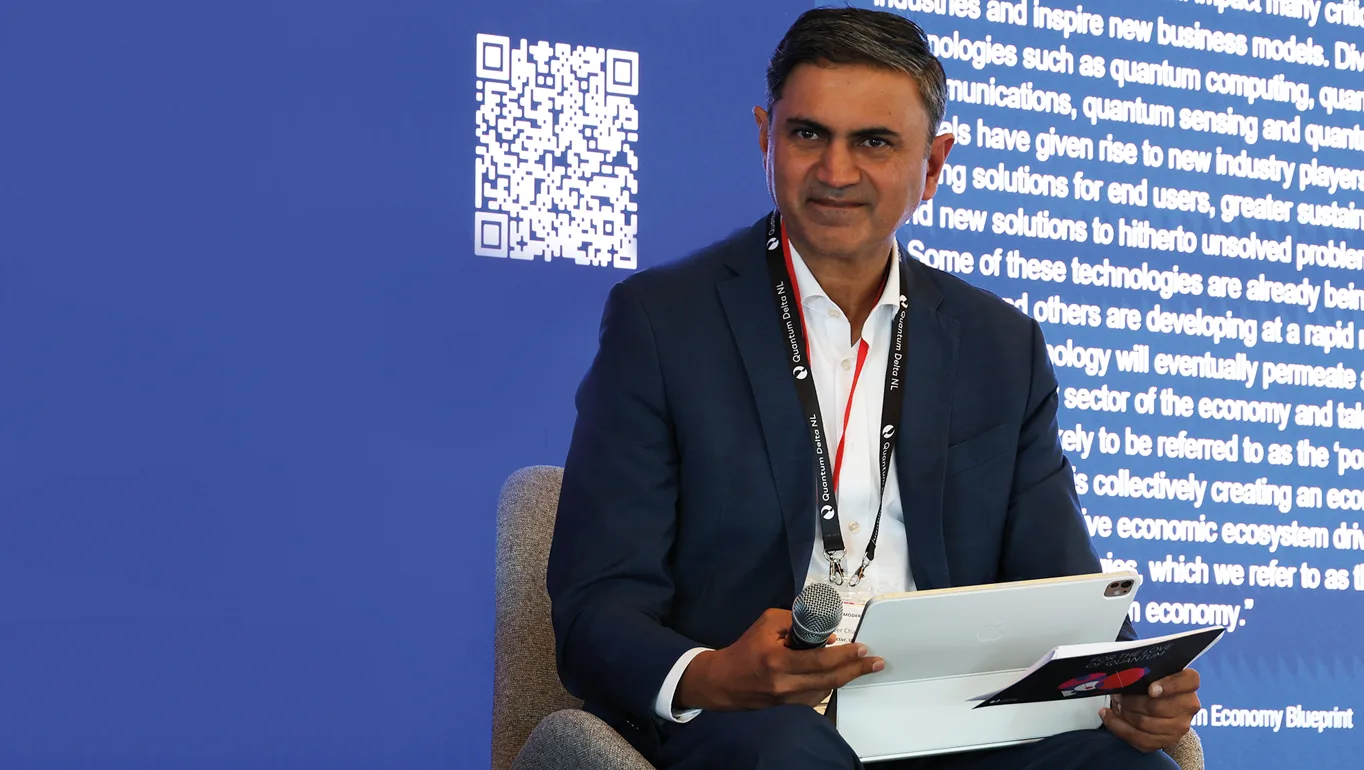
As UNICC (United Nations International Computing Centre) marks its 55th anniversary, its Director Sameer Chauhan sheds light on the organization’s critical role in ensuring the UN system is fit for a digitally transformed world – one where shared solutions and infrastructure drive trust, efficiency, and impact across the system.
In what ways does UNICC help ensure coherence across the many UN agencies’ digital strategies?
To start, it’s important to understand UNICC’s mandate. Since its establishment in 1970, UNICC has evolved into the UN’s largest strategic digital partner, supporting every UN organization and dozens of strategic international organizations with innovative digital solutions and services. These ‘digital foundations’ encompass a comprehensive set of secure and scalable technologies, infrastructure, tools, platforms, and services that support the UN’s digital transformation.
Moreover, we operate in a competitive environment. No UN entity is required to use our services, so we must earn their trust and prove our value; project after project, service after service, and year after year. Of course, each UN organization defines and manages its own digital strategy in line with its mandate, while UNICC plays a key role in supporting its implementation by developing these shared digital foundations.
We automate, integrate, and secure operations so organizations can focus on their missions: whether that’s health, education, or humanitarian aid.
As a result, UNICC stands out as a tried-and-tested shared services model that respects each partner’s digital and strategic independence while identifying and delivering on opportunities for greater cost savings, efficiency, and impact.
How does UNICC collaborate with governments, private sector, and academia while maintaining UN values of neutrality and inclusivity?
Partnerships across sectors are essential to delivering on UNICC’s core mission of serving the UN system. That’s why we engage with the private sector, academia, tech-based foundations and the public sector – not only to exchange knowledge but also to understand emerging technologies and anticipate evolving needs. This collaborative mindset is a principle embedded in our Strategic Framework for 2024–2030 and mandated by our Management Committee, a governing body made up of representatives from all UN organizations.
This commitment to cross-sector collaboration comes to life in many ways. For instance, take our work in cloud computing. On one hand, we work with major public cloud providers and have built deep technical capabilities in their offerings. This is so the UN system can best utilize the capabilities and benefit from shared efficiencies of scale. At the same time, we offer our own hosting services –including a UNICC-managed private cloud solution: UNIQCloud. This balanced approach lets us collaborate with tech companies while also building in-house solutions tailored to the system’s specific needs. The aim is to help maintain principles of neutrality and transparency and promote vendor independence.
And while UNICC does not receive core funding directly from Member States—as we operate under a cost-recovery model, with transparent rates that cover both direct and indirect service costs—we do identify opportunities for innovative funding models to support strategic, common needs that are shared across the UN system, in coordination with our Management Committee. A clear example is the UNICC Cybersecurity Fund, established in 2024 as a dedicated mechanism to ensure that shared cybersecurity services are available across the UN system, from smaller entities to major agencies. Luxembourg led the way as the first donor, with Spain joining soon after, helping establish a model that builds common capabilities and optimizes resources. This ensures that the entire system is best able to respond to rising cyberthreats against the UN system.
Our partnerships with civil society are equally important. A standout example is our collaboration with Quantum Delta NL, a leading quantum technology ecosystem based in the Netherlands. Together, we’re exploring the transformative potential of quantum technologies for the UN system and beyond. In late 2024, we co-hosted a two-day conference in The Hague alongside the International Telecommunication Union, which spotlighted how emerging quantum-based solutions could play a pivotal role in advancing the Sustainable Development Goals.
What steps is UNICC taking to ensure transparency, accountability, and trust in its digital services?
Trust is absolutely central to our role as a shared service provider. At UNICC, we work hard to earn and maintain that trust by aligning our operations and digital solutions with internationally recognized standards. This includes multiple ISO/IEC certifications covering information security, service management, privacy, and business continuity. It then gives our partners confidence that their systems and data are being managed responsibly and securely. But we don’t stop at compliance: we’re also deeply committed to continuous improvement and innovation, always looking for ways to enhance the quality of the services we deliver to our partners.
From a financial standpoint, transparency is built into our model. As mentioned before, UNICC operates without core funding and follows a full-cost recovery approach, meaning every service is directly tied to its actual cost. One of the key principles we uphold is a strict zero-cross-subsidy policy where each partner pays only for the services they use, and fees from one organization cannot be used to subsidize another organization. What’s more, the cost of each service is reviewed and approved by our Management Committee. This governance structure ensures fairness and accountability, while giving partners stability and control over pricing and terms.
To further strengthen trust and collaboration, UNICC hosted its first Annual UNICC Forum in October 2025. This was a milestone event designed to further understand the needs of our UN partners and create a platform for sharing insights. The Forum created space for active listening, learning, and gathering feedback on technology and emerging technologies that can be implemented in the entire UN system.
Can you share some of the most exciting innovations UNICC is piloting to improve UN system operations and service delivery?
UNICC is piloting several exciting innovations that are transforming how the UN system operates and delivers services.
One of the most exciting developments is the UN Digital ID, a secure digital wallet designed for UN personnel. It allows UN personnel to control and manage their data across HR, medical, travel, security, payroll, and the pension system. This was developed, under the High-Level Committee on Management’s sponsorship, in close collaboration with the UN Joint Staff Pension Fund, with my colleague Dino Cataldo Dell’Accio, UNJSPF’s Deputy Chief Executive, playing an instrumental role in bringing it to fruition.
The second example is our newly launched AI Hub. It’s a collaborative platform designed to help organizations tap into AI’s transformative potential, responsibly and effectively. We’ve kicked things off with two flagship initiatives: the AI Sandbox, which provides a secure testing environment for piloting AI solutions, and the AI Academy, which offers role-specific training to build AI literacy. This Hub has been made possible thanks to the support and initial funding contribution of the Canton of Geneva, our first contributor and a key enabler in bringing this shared vision to life.
And finally, there’s the Digital Hub of Treasury Solutions, a joint platform led by UNHCR and UNDP that streamlines money transfers across the UN system. It processes over 100,000 transactions each month across 115 countries, totaling more than $38.7 billion in 2024. It’s already showing major gains in transparency, cost-effectiveness, and impact delivery. UNICC’s Centre of Excellence for Payment Technology and Innovation has been instrumental in shaping and scaling the solution, which now serves 13 UN agencies.