


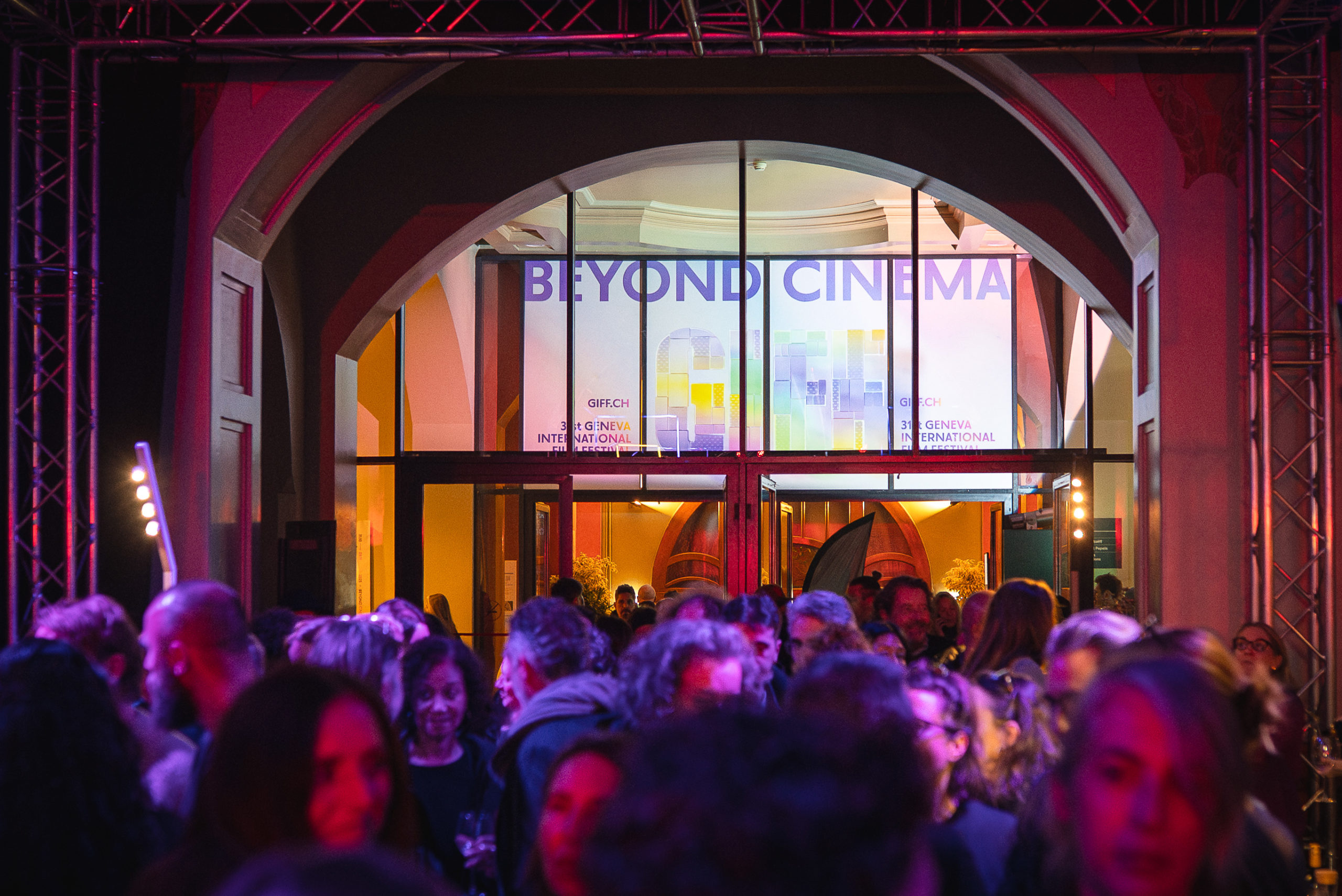
Rounded in 1995, the Geneva International Film Festival (GIFF) returns for its 32nd edition from 30 October to 8 November, 2026. The festival brings together film, series, and immersive art, showcasing Swiss productions alongside European and international works in a program designed to encourage discovery, dialogue, and exchange.
GIFF takes place primarily around Plainpalais, at the Maison Communale de Plainpalais and Théâtre Pitoëff, as well as at Cinémas du Grütli, Cinérama Empire, and Fonction:cinéma. Many screenings are followed by introductions and Q&As with filmmakers, artists, and creators, giving audiences the opportunity to engage directly with the people behind the work.
A program that crosses borders and formats
Opening night on 30 October will feature Tangles, Leah Nelson’s animated feature debut, presented as a Special Screening at Cannes. Adapted from Nelson’s graphic novel about her mother’s Alzheimer’s disease, the film uses humor and black-and-white animation to explore the unraveling of memory. Julia Louis-Dreyfus and Abbi Jacobson lead the voice cast.
The International Feature Competition brings together 10 films, all presented as Swiss premieres. Among them, La Gradiva by Marine Atlan and Yesterday the Eye Didn’t Sleep by Rakan Mayasi reflect the breadth of the selection, which spans countries, cultures, and storytelling traditions.
Swiss cinema also has a strong presence in this international lineup. Geneva filmmakers Nicolas Chapoulier and Pauline Julier present Les Indes, their first fiction feature, following its screening at the Venice International Film Festival. Co-produced by RTS, the film follows three men transporting a portrait of the Infanta from the Spanish court to that of Louis XIV. It will have its Swiss premiere at GIFF, with the filmmakers in attendance.
The International Series Competition includes Alice, created by Claire Lemaréchal and Tim Loane, which chronicles the remarkable life of Alice Guy, from France to the United States. A pioneer and the first female fiction filmmaker in cinema history, Alice Guy was also an artist, entrepreneur, wife, and mother. The six-part series explores her professional struggles, thwarted romances, and lifelong pursuit of freedom and recognition.
Beyond the competitions, the Highlights section brings together a diverse range of formats and genres. Ravalear: Not for Sale, directed by Pol Rodríguez and starring Sergi López, follows a family fighting to save a century-old restaurant in Barcelona’s Raval neighborhood.
Everest: The First Ascent, by Benjamin Auriche and Jean Dellac, brings documentary and adventure together in a story of exploration and endurance. Immersive work remains a central part of GIFF’s identity. In the International Immersive Experience Competition, Captures by Geneva-based studio Structurals and DJ Owelle creates an audiovisual environment in which sound and images evolve in real time. The Future Is Sensible Competition looks at technology through social and environmental questions. Res Natura, by Mélanie Courtinat and Swiss designer and artist Julien Mercier, reconstructs Swiss landscapes from 3D scans to explore human responsibility for the deterioration of ecosystems.
Mira Nair: between places and identities
The festival’s 2026 Guest of Honor is Indian-American filmmaker Mira Nair, who will receive the Film & Beyond Award. From Mississippi Masala (1991) to Monsoon Wedding (2001), Nair’s work has explored displacement, belonging, and the relationship between private lives and political history.
Her own journey between Delhi, Kampala, and New York gives these themes particular resonance. In 2026, her son Zohran Mamdani became mayor of New York City, adding another dimension to her long-standing exploration of identity, migration, and belonging. Mira Nair will meet with the public at Théâtre Pitoëff on 31 October.
Weekends for all
GIFF KIDS offers families another way to experience the festival. At the Maison Communale de Plainpalais, Muyi, la légende du village des femmes, directed by Julien Chheng, is aimed at audiences ages eight and above. In collaboration with Cinémas du Grütli, younger children can discover Le Noël d’Ernest et Célestine and Swiss filmmaker Benjamin Botella’s Chasing Horrifox, both suitable for children ages four and above.
And when the screenings end, the festival keeps going. On Fridays and Saturdays, the free-entry GIFF Nights take over the festival’s central venue from 10 p.m. Four nights will explore electronic music and club sounds ranging from gqom and baile funk to R&B, batida, trap, and Afro-inspired sounds, featuring artists from Geneva’s local scene, in collaboration with Cavale bookings.
It’s another side of GIFF: a festival that extends beyond the screening room, creating space for audiences, guests, and artists to connect, discover new work, and share the experience together.
MORE INFO
The full program, schedules
and tickets are available at giff.ch
– – – – – – – – – – – – – – – – – – – – – – –
Program Announcement
October 8, 2026
32nd edition of GIFF
October 30–November 8, 2026
14th GIFF PRO
November 3–6, 2026